

How to Reduce Copper Levels in Drinking Water
Last Updated: November 7, 2026
Quick Summary
To reduce copper in your drinking water, run the cold kitchen tap for two minutes before drinking or cooking, and never use the hot tap for drinking water or formula. Flushing is the fastest way to reduce copper today, but it does not fix the cause, so plan plumbing repairs or a reverse osmosis or ion exchange filter.
- Copper usually comes from your own plumbing, and the Drinking Water Inspectorate standard is 2 mg per litre.
- Take a first-draw sample after water sits for at least six hours, plus a flushed sample after two minutes.
- Boiling water does not remove copper and slightly concentrates the minerals left behind.
- Reverse osmosis and ion exchange remove copper, while carbon-only jugs are generally less effective.
- Flushing is likely enough if metallic taste or blue-green staining clears after two minutes of running the cold tap.
Table of Contents
- Where Copper in Drinking Water Comes From
- How to Test for Copper in Drinking Water
- Reading Your Results: What Copper Levels Mean for Your Health
- How to Flush Copper from Water Pipes
- Does Boiling Water Remove Copper?
- Choosing a Copper Water Filter and Other Treatment Options
- What to Do While Waiting for Results or Repairs
- Choosing a Water Filter for Your Home
- Frequently Asked Questions
Where Copper in Drinking Water Comes From
Copper in drinking water usually comes from your own plumbing, not from the water source. As water sits in copper pipes, fittings and hot-water cylinders, small amounts of the metal dissolve into it. The longer it sits, the more copper it picks up.
This matters because copper is a metal that can build up in the body over time. The Drinking Water Inspectorate's guidance on copper sets a standard of 2 mg per litre for copper in drinking water, and water companies must meet it at the tap.
Households often find that odd-tasting water is linked to their pipes rather than their supplier.
Three things speed up copper corrosion:
- Soft or acidic water eats into metal faster
- Hot water dissolves more copper than cold
- Stagnant water sitting overnight in pipes absorbs the most metal
Older homes with original copper pipework are the usual suspects. New builds can have problems too, if the plumbing was poorly installed or the water is aggressive.
How to Test for Copper in Drinking Water
The only reliable way to know your copper level is a laboratory test. Test strips and cheap kits give only rough readings, so a laboratory test is the more reliable option.
Here is how to test for copper in drinking water properly:
- Contact your water supplier first. They must test your water on request, and many do it free.
- Or use a UKAS-accredited lab. Search for one that tests drinking water and posts you a sample bottle.
- Take two samples. One first-draw sample, one after flushing. This tells you whether the copper comes from your pipes or the supply.
- Label and post promptly. Copper readings change if a sample sits around.
A common mistake is testing only the kitchen cold tap. If you have a hot-water cylinder or a mixer tap, test those too.
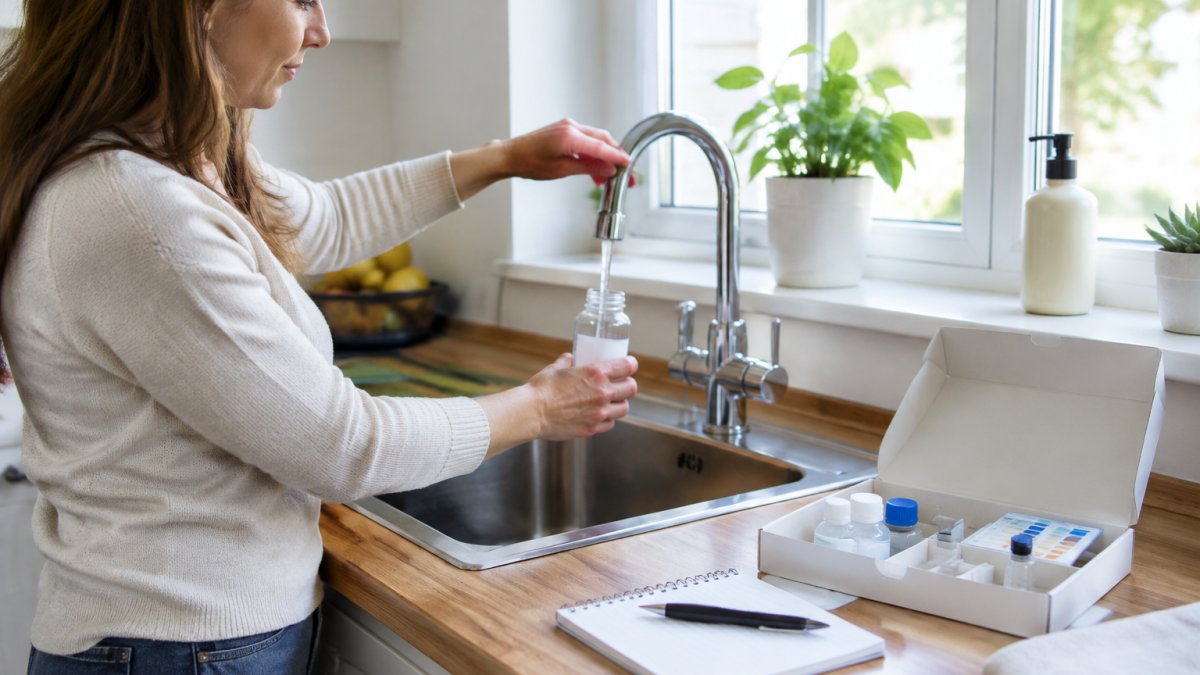
Collecting a Representative Water Sample
A representative sample means the water you actually drink. For copper, that usually means a first-draw sample: fill the bottle first thing in the morning, before anyone runs a tap.
Run no water for at least six hours beforehand. Then fill the bottle slowly and cap it straight away. If you also want a flushed sample, run the cold tap for two minutes and fill a second bottle.
Testing your water at the tap is only half the job. Our guide on how to test tap water quality walks through the full sampling method step by step.
Reading Your Results: What Copper Levels Mean for Your Health
A result at or below the drinking-water standard is considered acceptable. Above that, you have a problem worth fixing.
Copper is an essential nutrient, but too much causes trouble.
Watch for these signs of elevated copper:
- A metallic or bitter taste
- Blue-green staining on sinks, baths and laundry
- Water that tastes worse first thing in the morning
Infants and young children are the group to protect first. If you are preparing formula, consult your doctor or health visitor about safe water sources until the source is checked.
If your result is high, the next step depends on the cause. That is where most guides stop, and it is the part that matters.
How to Flush Copper from Water Pipes
Flushing is the fastest way to reduce copper in your water today. It clears the stagnant water that has been sitting in contact with the pipes.
Do this:
- Run the cold kitchen tap for two minutes before drinking or cooking.
- Never use the hot tap for drinking water or formula.
- Flush more in the morning, after holidays, or any time water has sat for hours.
- Collect flushed water in a jug for plants rather than wasting it.
Flushing lowers the copper you drink, but it does not fix the cause. It is a holding measure while you plan repairs or treatment.
Watch out: flushing the hot tap does nothing useful. Hot water holds more copper, so always draw drinking water from the cold side.
Does Boiling Water Remove Copper?
No. Boiling water does not remove copper. It makes the problem slightly worse, because boiling concentrates the minerals left behind as water evaporates.
Boiling kills bacteria. It does not touch dissolved metals. So if you are wondering how to reduce copper levels in drinking water, boiling is not on the list.
The same goes for letting water stand or adding lemon. Neither removes copper. Only flushing, plumbing changes or a filter will.
Choosing a Copper Water Filter and Other Treatment Options
A copper water filter is the most practical fix for most homes. Reverse osmosis and ion exchange are methods that can remove copper, while carbon-only jugs are generally less effective for metals.
Treatment effectiveness varies by method:
| Method | Removes copper? | Maintenance | Best for |
|---|---|---|---|
| Reverse osmosis | Yes, high removal | Filter changes, water waste | Whole-home or under-sink |
| Ion exchange | Yes | Resin recharge or swap | Hard water areas |
| Carbon block filter | Partial | Cartridge changes | Taste and odour |
| Jug filter | Limited | Frequent cartridge swaps | Renters, small households |
If you want the wider picture on metals, our guide on how to remove heavy metals from water covers the treatment methods in more depth.
Treatment Comparison: Limitations and Maintenance
Each treatment method has trade-offs in maintenance and water use.
Cost matters over time, not just upfront. Our breakdown of long term water filter maintenance costs shows what each method really costs to keep running.
Before you trust any copper-removal claim, check the proof. This guide on how to verify water filter lab testing explains what third-party testing should show.
What to Do While Waiting for Results or Repairs
Waiting is the awkward part. You have a sample in the post or a plumber booked, and you still need to drink water.
Decide whether flushing is enough
Flushing works when the copper is a stagnation spike from your own pipework. It is not sufficient when the source is persistent. Use these triggers to decide:
- Flushing is likely enough if the metallic taste or blue-green staining clears after two minutes of running the cold tap, and the problem only appears after water has sat overnight.
- Flushing is probably not enough if the taste or staining persists after flushing, if staining appears on cold-only fixtures, or if multiple taps across the property show the same sign.
- Seek advice if anyone in the household is pregnant, formula-feeding an infant, or has liver or kidney conditions, and you suspect elevated copper before results arrive.
Watch out: flushing the hot tap does nothing useful and can draw more copper into the water you then use. Always draw drinking water from the cold side.
A day-by-day interim routine
Until the source is fixed or results confirm the water is within the standard:
- Morning flush. Run the cold kitchen tap for two minutes before any drinking, cooking, or formula preparation. Collect the flushed water in a jug for plants rather than wasting it.
- Cold water only. Use cold water for drinking, cooking, and formula, then heat it if needed. Never draw drinking water from the hot tap.
- Stored water. Keep a covered jug of freshly flushed water in the fridge so household members are not tempted to draw a first-draw glass.
- Infant formula. Switch to low-copper bottled water or a point-of-use filter until results are back, and follow the manufacturer's instructions for any bottled water used for formula.
- After absences. Flush for longer after holidays or any period when water has sat in the pipes for many hours.
When to escalate before results arrive
Contact your water supplier or a qualified plumber sooner rather than later if:
- Blue-green staining is spreading or appearing on new fixtures
- Water tastes metallic even after flushing
- You have a hot-water cylinder and the hot supply is affected
- Anyone in the household is in a higher-risk group
Your supplier can test your water on request. Ask them to check water chemistry as well as copper.
What not to do while you wait
Boiling does not remove copper. Letting water stand or adding household remedies does not remove copper. Flushing and using cold water are sensible interim measures.
Choosing a Water Filter for Your Home
Match the filter to the problem. If copper is high at the first draw but fine after flushing, the pipes are the source, and a point-of-use filter at the kitchen tap solves your drinking water. If the flushed sample is also high, the supply is involved, and you should speak to your supplier.
For many households, a countertop or under-sink system using reverse osmosis or ion exchange may be a suitable option. A jug can suit renters who cannot plumb anything in, though cartridges will need frequent changing.
If you want a shortlist to act on, our tested guide to the best countertop water filter compares the top options for 2026.
Copper in your water is fixable, and you do not have to guess your way through it. At Waters Co, our multi-stage systems use submicron filtration and ion exchange to remove heavy metals, chlorine and microplastics, with long-life filters lasting up to two years. Every system is backed by a lifetime warranty and trusted by more than 67,000 customers. Get started with Waters Co and enjoy cleaner, better-tasting water from your own tap.
Frequently Asked Questions
How can I reduce copper levels in drinking water?
Start by flushing your taps for two to three minutes each morning to clear water that has sat in copper pipes. If levels remain high, install a point-of-use water filter certified for copper removal, such as a reverse osmosis system or an ion exchange filter. For persistent problems, have a plumber inspect your pipework for corrosion and consider replacing affected sections. Testing first tells you whether the source is your pipes or the incoming supply.
How do I test my drinking water for copper?
Use a first-draw sample: collect water that has been sitting in the pipes overnight without running the tap. This shows the highest copper concentration from your plumbing. A flushed sample, taken after running the tap for two to three minutes, shows the baseline level from your supplier. Compare both results with the UK drinking water standard. Home test kits are available, but laboratory analysis gives more accurate figures for copper and other metals.
Does boiling water remove copper?
No. Boiling water does not remove copper. It kills bacteria but leaves dissolved metals behind, and as water evaporates during boiling, the concentration of copper can actually increase. The only reliable ways to reduce copper are flushing stagnant water from pipes, installing a suitable filter, or repairing corroded plumbing. If your water has a metallic taste or blue-green staining, test it before relying on boiling as a solution.
Can running the tap reduce copper levels?
Yes, flushing the tap is effective for copper that accumulates while water sits in pipes. Run the cold tap for two to three minutes first thing in the morning, or until the water runs cold, before using it for drinking or cooking. This is especially important in homes with older copper plumbing or soft, acidic water that corrodes pipes more quickly. Flushing reduces exposure but does not fix the underlying corrosion, so combine it with testing and, if needed, treatment.
