

How to Remove Heavy Metals From Water
Table of Contents
- Step 1: Test Your Water for Heavy Metals
- Step 2: Identify Which Heavy Metals Are Present
- Step 3: Choose Your Removal Method
- Does Boiling Water Remove Heavy Metals?
- Reverse Osmosis for Heavy Metals
- Best Water Filter for Heavy Metals
- Step 4: Install and Maintain Your Filter
- Common Mistakes to Avoid
- Frequently Asked Questions
Last Updated: October 11, 2026
Step 1: Test Your Water for Heavy Metals
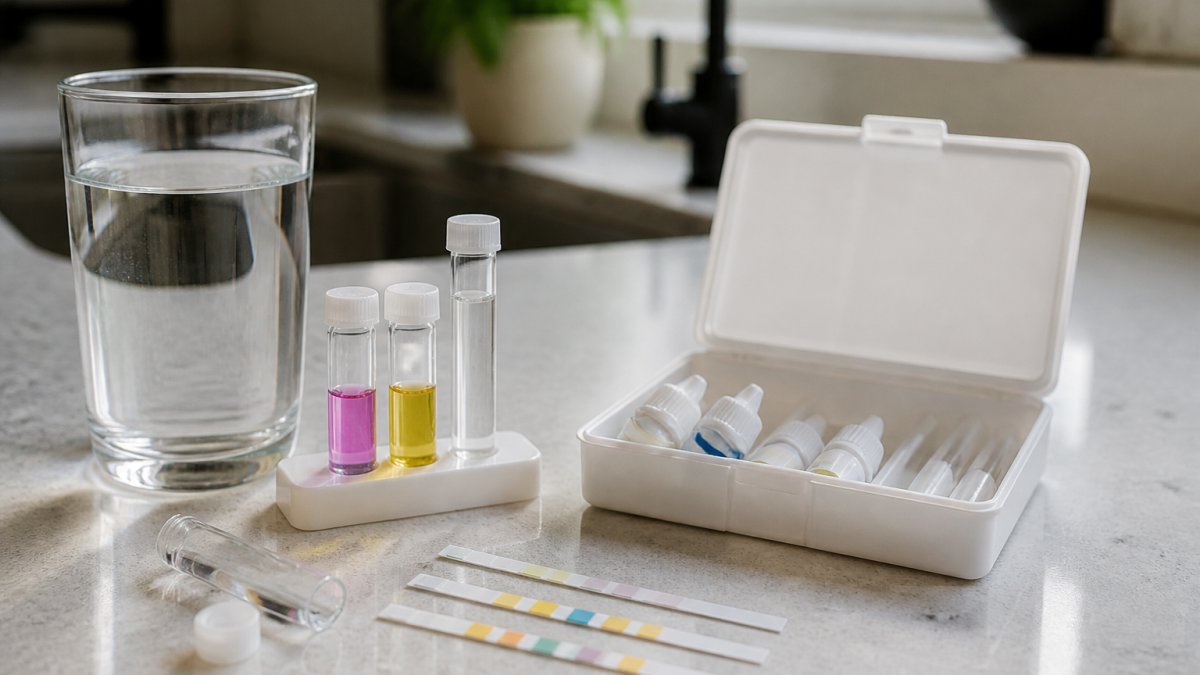
Testing your water is the essential first step before choosing how to remove heavy metals water. You cannot treat what you don't measure. A proper water test tells you exactly which metals are present, at what levels, and whether action is needed at all.
Why testing comes first
Most people skip testing and buy a filter based on marketing claims alone. That's backwards. Your water might contain lead but not mercury. Your neighbour's water might be fine.
UK drinking water standards set maximum contaminant levels for public supplies. A test shows whether your water meets these standards or exceeds them. This data drives every decision that follows.
How to order a water test
Contact your local water company first. They provide free annual water quality reports. If you suspect contamination beyond what they monitor, order a certified lab test. Search for "water testing laboratory" in your area and request analysis for heavy metals specifically.
A basic heavy metals panel tests for:
- Lead
- Mercury
- Arsenic
- Cadmium
- Chromium
Certified labs cost between £50 and £150 for a comprehensive panel. The test takes 1-2 weeks. You'll receive a detailed report showing each metal's concentration in parts per billion (ppb) or milligrams per litre (mg/L).
Reading your test results
Your report compares results against drinking water standards. Numbers above the safe limit require treatment. Numbers below the limit mean that particular metal is not a concern for your household.
Look for these key columns in your results:
- Metal name
- Your water's level
- Maximum contaminant level (MCL)
- Whether it exceeds the standard
If your test shows lead at 8 ppb and the MCL is 10 ppb, you're technically under the limit but still at risk. Lead has no truly safe level, especially for children. Many people choose to filter even when below the official limit.
Step 2: Identify Which Heavy Metals Are Present
Different metals require different removal methods. Knowing exactly which metals contaminate your water helps you select the right filtration approach. This is where your test results become actionable.
Lead and copper
Lead enters water through old pipes and solder. Copper leaches from newer brass fittings. Both metals pose serious health risks, especially for children and pregnant women. Lead damages developing brains. Copper causes gastrointestinal upset and liver damage at high levels.
If your test shows lead or copper above safe levels, you need a filter rated for these metals. Waters Co's multi-stage systems like the BIO 400 filter out lead and copper as part of their 13-stage process, removing up to 99% of heavy metals from your tap water.

Mercury and arsenic
Mercury contamination is rare in UK tap water but common in areas near industrial sites or old mines. Arsenic occurs naturally in some regions and poses long-term cancer risk. Both require aggressive filtration.
Reverse osmosis systems excel at removing mercury and arsenic. These metals bind poorly to activated carbon alone, so a multi-stage approach works best. Combining activated carbon with ion exchange or reverse osmosis gives you the coverage these dangerous metals demand.
Other toxic metals
Cadmium, chromium, nickel, and other metals occasionally appear in test results. Your test report identifies them specifically. Once you know which metals are present, matching them to the right removal method becomes straightforward.
Most multi-stage systems target a broad range of metals simultaneously. This is why comprehensive water filtration beats single-method approaches. You're not guessing which metals to remove. Your test data guides the choice.
Step 3: Choose Your Removal Method
Three main approaches remove heavy metals from water. Each has trade-offs in speed, cost, and effectiveness. Your test results determine which method suits your situation.
Activated carbon filtration
Activated carbon works by adsorption. Heavy metal particles stick to the carbon's porous surface as water passes through. This method removes lead, copper, and some other metals effectively but performs poorly on mercury and arsenic.
Carbon filters are affordable, require no electricity, and improve taste and odour. They don't remove dissolved minerals, so your water stays mineralised. The trade-off is filter life.
Waters Co uses activated coconut shell carbon bonded with silver in products like the AceBio+ filter jug.

Ion exchange and KDF media
Ion exchange resins swap harmful ions for harmless ones. A resin bead releases sodium or potassium ions as it captures heavy metal ions. This method works well for lead, copper, and some other metals.
KDF media uses a copper-zinc alloy to reduce chlorine and some heavy metals through oxidation and precipitation. KDF works best alongside other methods rather than alone.
Both methods last longer than carbon alone. Resins regenerate, extending their life. KDF media typically lasts 2-3 years before replacement. These approaches cost more upfront but reduce long-term filter expenses.
Multi-stage filtration systems
Combining multiple methods catches a wider range of contaminants. A typical multi-stage system runs water through sediment filters, activated carbon, ion exchange, and sometimes additional media in sequence.
Each stage targets different contaminants. Sediment filters remove particles. Carbon removes chlorine and some metals. Ion exchange captures others. This layered approach removes up to 99% of heavy metals and other contaminants.
The Waters Co BIO 400 and BIO 500 systems use 13 stages of filtration and activation.
Does Boiling Water Remove Heavy Metals?
Boiling does not remove heavy metals. Heat cannot separate dissolved metals from water. Boiling only removes volatile compounds like chlorine and kills bacteria. Heavy metals remain in the water after boiling.
In fact, boiling concentrates some contaminants. As water evaporates, the remaining water contains higher metal concentrations. If your water contains lead, boiling makes it worse for that particular contaminant.
Boiling works for microorganisms and some chemicals. For heavy metals, you need filtration. This is why boiling alone is insufficient if your test shows metal contamination.
Reverse Osmosis for Heavy Metals
Reverse osmosis (RO) forces water through a semi-permeable membrane under pressure. The membrane blocks most dissolved solids, including heavy metals.
BIO 400 5.25 Litre Bench Top Water Filter →
RO systems require electricity and water pressure. They waste water during the filtration process, typically producing 1 litre of filtered water for every 3-4 litres of tap water used.
RO excels when your water contains multiple dangerous metals or when you need the highest possible purity. The trade-off is that RO removes beneficial minerals along with contaminants.
RO works best as part of a multi-stage system rather than alone.
Best Water Filter for Heavy Metals
The best filter depends on which metals contaminate your water, your budget, and your living situation. Renters need portable solutions. Homeowners can install permanent systems. Both have options.
Portable filter jugs
Filter jugs offer flexibility. They fit in any fridge. No installation required. Perfect for renters or people who move frequently. Refill time is slow, typically 5-10 minutes for a full jug, but the convenience often outweighs this.
The AceBio+ 1.0 Litre jug at £125 removes up to 99% of heavy metals through 10 stages of filtration. Filter cartridges last up to 24 months, costing roughly 3 pence per litre of filtered water.
Jug filters work well when contamination levels are moderate. If your test shows extremely high metal levels, a more aggressive system might be necessary.
Bench-top systems
Bench-top systems sit on your counter and connect to your tap via a hose. They filter faster than jugs and hold more water. No plumbing required. Installation takes minutes.
The BIO 400 holds 5.25 litres and filters through 13 stages. At £329, it costs more than a jug but filters faster and provides more capacity. The filter set lasts up to 18 months and costs around 3 pence per litre.
The BIO 500 MAX offers a 7-litre capacity for £349. Both systems alkalise water and add beneficial minerals alongside removing heavy metals.

| System Type | Capacity | Setup | Filter Life | Cost per Litre | Best For |
|---|---|---|---|---|---|
| Portable jug | 1 litre | None | 24 months | 3p | Renters, singles |
| Bench-top | 5-7 litres | Tap connection | 18 months | 3p | Families, permanent homes |
| Under-sink RO | Unlimited | Professional install | 12-24 months | 5-8p | Highest purity needed |
Step 4: Install and Maintain Your Filter
Installation difficulty depends on your system type. Portable jugs require no installation. Bench-top systems need a tap adapter. Under-sink systems need professional plumbing.
Setup and first use
Portable jugs come ready to use. Fill with tap water and let it filter. The first cartridge takes 30 minutes to activate. Discard this first batch and refill.
Bench-top systems require a tap adapter. Most come with universal adapters that fit standard kitchen taps.
First use: Run 2-3 full cycles through a new filter before drinking. This rinses the filter media and ensures clean water from the start.
Under-sink systems need professional installation unless you're experienced with plumbing. The installer connects the system to your cold water line and installs a dedicated tap at your sink.
Filter replacement schedule
Portable jug filters last 24 months or 4,800 litres, whichever comes first. Most people replace based on flow rate. When water filters slowly, the cartridge is saturated and needs replacement.
Bench-top filters last 18 months or 12,000 litres. Waters Co sends filter reminder notifications so you don't forget.
Under-sink RO filters need replacement every 12-24 months. Pre-filters (sediment and carbon) typically need changing annually. The RO membrane lasts 2-3 years.
Post-treatment testing
After installing your filter, order a follow-up water test 2-4 weeks later. This confirms your system removes metals as expected. If results show metals still present above safe levels, your filter may be undersized or incorrectly installed.
Test annually if you have children or pregnant household members. Test every 2-3 years if contamination is low. This catches filter degradation before it becomes a health issue.
Common Mistakes to Avoid
Skipping the initial test wastes money on unnecessary filtration. You buy a system for metals that aren't present. Test first, filter second.
Choosing a filter based on marketing claims alone rather than your actual water profile leads to poor results. A carbon-only filter won't remove mercury.
Installing a filter and never maintaining it defeats the purpose. Saturated filters stop working. Replace cartridges on schedule. Check water flow.
Assuming all filters perform equally is another common error.
Forgetting to test after installation leaves you guessing whether your system works. Post-treatment testing proves your filter is effective.
Frequently Asked Questions
Can a water filter remove heavy metals?
Yes. Multi-stage water filters using activated carbon, ion exchange, and KDF media can remove heavy metals including lead, mercury, and copper. The effectiveness depends on the filter type and which metals are present. Waters Co's BIO 400 and BIO 500 systems filter out up to 99% of heavy metals through 13 stages of filtration and activation. Portable jugs like the AceBio+ also remove heavy metals but at a lower capacity than bench-top systems.
How do I test my water for heavy metals?
Order a test kit from your local water supplier or an accredited laboratory. Collect a cold-water sample from your tap in a sterile container, then mail it to the lab or drop it off. Results typically arrive within 5-10 working days and show the concentration of each metal detected. Testing is the essential first step because it identifies which metals you need to remove and whether removal is necessary.
Does boiling water remove heavy metals?
No. Boiling does not remove dissolved heavy metals like lead or mercury; it only removes some volatile compounds and kills bacteria. In fact, boiling can concentrate heavy metals by reducing water volume. Filtration using activated carbon, ion exchange, or reverse osmosis is required to remove dissolved metals from drinking water.
How often should I replace my heavy metal filter?
Replacement frequency depends on your filter type and water quality. Waters Co's bench-top systems (BIO 400 and BIO 500) last up to 18 months or 12,000 litres, while portable jugs like the AceBio+ last up to 24 months or 4,800 litres. Check your water quality report; higher metal concentrations shorten filter life. Always follow the manufacturer's replacement schedule to maintain removal effectiveness.
Heavy metal contamination in tap water demands a methodical approach: test, identify, filter, install, maintain, and verify. Waters Co's advanced filtration systems remove up to 99.9% of heavy metals including lead, mercury, and arsenic. With 13 stages of filtration, alkalisation, and remineralisation, the BIO 400 and BIO 500 systems deliver clean, mineral-rich water without electricity or plumbing. Shop now and enjoy safe drinking water with a lifetime warranty backing every system.