

Long Term Water Filter Maintenance Costs: 2026 Guide
Table of Contents
- Long Term Water Filter Maintenance Costs: What You'll Actually Pay
- How Often to Change Water Filter Cartridges by System Type
- Water Filter Cartridge Replacement Cost: A Transparent Breakdown
- Reverse Osmosis Filter Replacement Cost and Multi-Year Ownership
- Your Water Filter Maintenance Schedule: Steps and Reminders
- DIY vs Professional Servicing: Which Saves More Long Term?
- Ways to Reduce Long Term Water Filter Maintenance Costs
- Conclusion: Budgeting for Clean Water Without Surprises
- Frequently Asked Questions
Last Updated: October 15, 2026
Long Term Water Filter Maintenance Costs: What You'll Actually Pay
Water filter maintenance is the ongoing cost of replacing cartridges, cleaning components and servicing your system so it keeps removing contaminants. At Waters Co, we've spent four decades helping households understand the real price of clean water isn't the upfront cost, it's what you spend over three, five and ten years.
Long term water filter maintenance costs vary enormously by system type, a jug filter and a reverse osmosis system can differ by hundreds of pounds a year.
What You'll Need to Plan Your Budget
Gather a few basics first:
- Your system type (jug, under-sink, reverse osmosis or whole-house)
- The manufacturer's stated filter lifespan in litres or months
- The current price of replacement cartridges
Once you have these, you can build a realistic annual figure. The Drinking Water Inspectorate guidance on private water supplies is a useful reference for understanding what's in your water and why filtration matters.

How Often to Change Water Filter Cartridges by System Type
Replacement frequency depends entirely on the system, a jug filter might need changing monthly, while an RO membrane can last two years or more. The general pattern:
- Jug filters: every 100-150 litres, often monthly
- Under-sink carbon filters: every 6-12 months
- Reverse osmosis pre-filters: every 6-12 months
The manufacturer's guidance is your starting point, but water quality and usage shift these numbers.
Pre-Filter, Post-Filter and Membrane Replacement Intervals
Each stage of a multi-stage system has its own lifespan, and this is where costs stack up. Pre-filters catch sediment, rust and dirt, cheap and changed most often. Post-filters polish taste and odour, usually annually.
Water Filter Cartridge Replacement Cost: A Transparent Breakdown
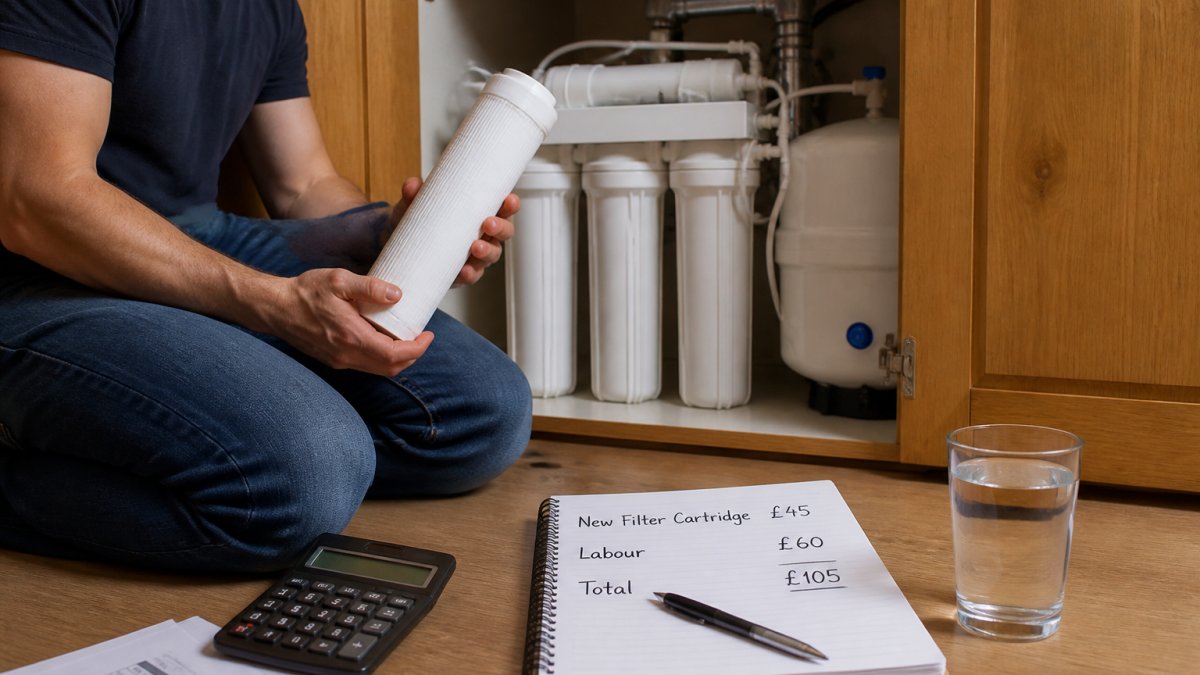
Water filter cartridge replacement cost is the biggest ongoing expense for most households, and the most predictable once you know your intervals and treated-water volume. To budget, you need four inputs: cartridge price, stated lifespan, your actual treated-water use, and whether you fit it yourself or pay for labour.
| System Type | Typical Cartridge Cost | Replacement Frequency | Typical Annual Cartridge Cost |
|---|---|---|---|
| Jug filter | £15-£30 | Monthly (about 100-150 litres) | £180-£360 |
| Under-sink carbon | £30-£80 | Every 6-12 months | £60-£160 |
| Reverse osmosis | £80-£200 per set | Pre-filter 6-12 months, membrane 18-24 months | £120-£250 |
| Whole-house | £50-£150 | Every 3-12 months | £150-£400 |
These ranges assume average hardness and household use; your actual figure depends on how much water you treat and how hard it is.
Cost Scenarios by Household Size and Water Usage
Usage drives replacement frequency more than anything else, because most cartridges are rated by litres as well as months. Work out your daily treated-water volume first: add cooking, coffee machines, kettle filling and any plumbed appliance fed from the filter, and the number rises quickly.
- One person, light use (about 2 litres a day): lowest end of every range. A jug filter may last close to its full monthly rating; an under-sink carbon filter can run to 12 months.
- Couple, average use (about 4 litres a day): middle of the range. Expect one replacement a year for under-sink carbon and pre-filters changed once or twice for reverse osmosis.
- Family of four (about 8 litres a day): upper end. Pre-filters often need changing twice a year, and jug cartridges may not reach the stated month limit before the litre limit is hit.
Households typically underestimate their volume by a third, if you fill a kettle, coffee machine and water bottle from the same filter, you treat more water than you think.
Maintenance Costs Beyond Cartridges
Cartridges are not the whole bill. A realistic long-term budget includes:
- Labour: professional servicing adds an hourly rate plus a call-out charge, and whole-house and RO jobs take longer than a simple under-sink change.
- Sanitisation: tanks, housings and lines can develop biofilm; periodic sanitisation prevents taste issues and premature cartridge failure.
- Membrane flushing: some RO systems benefit from periodic flushing, which uses water rather than parts but shows on the water bill.
Add these to your cartridge total and the multi-year figure becomes more honest, a system costing £120 a year in cartridges may cost £160-£200 once labour, sanitisation and occasional parts are included.
Multi-Year Cost of Ownership by System Type
Multi-year totals shape a household budget more than annual figures, because they smooth out the years when a membrane or whole-house media change lands.
Using the midpoints of the ranges above, and assuming DIY fitting for jug and under-sink systems and occasional professional servicing for RO and whole-house:
- Jug filter: roughly £180-£360 a year in cartridges, with little else to spend. Over five years, that is £900-£1,800. Over ten years, £1,800-£3,600.
- Under-sink carbon: roughly £60-£160 a year in cartridges, plus occasional housing or seal parts. Over five years, £300-£800. Over ten years, £600-£1,600.
- Reverse osmosis: roughly £120-£250 a year in cartridges, plus water waste, occasional membrane flushing and periodic servicing. Over five years, £600-£1,250 in cartridges alone, with servicing and water use pushing the total higher. Over ten years, £1,200-£2,500 in cartridges, plus the same extras.
Two things stand out: the cheapest upfront system is not always cheapest over ten years, because jug cartridges are replaced so often; and RO and whole-house systems have a wider spread, because labour and water use vary more than cartridge prices.
For a single planning number, take the annual cartridge cost, add 20-30% for labour, sanitisation and occasional parts, then multiply by the years you expect to keep the system.
Reverse Osmosis Filter Replacement Cost and Multi-Year Ownership
Reverse osmosis filter replacement cost looks high upfront, but the multi-year picture is more balanced than people expect: an RO system is a stack of stages, each with its own price and lifespan, and they do not all wear out at once.
- Sediment pre-filter: catches rust, grit and sediment. Cheapest stage, changed most often, usually every 6-12 months.
- Carbon pre-filter: protects the membrane from chlorine and taste compounds. Usually every 6-12 months.
- RO membrane: the main contaminant barrier. Usually every 18-24 months, or when flow and rejection drop.
Over three years, a typical household replaces pre-filters three to six times, the post-filter two to three times and the membrane once or twice, staggering keeps the annual figure manageable, even though the membrane is the most expensive single part.
Therapy Shower Lavender 2 Pack Replacement cartridges →
The Water Waste Cost Most Guides Ignore
RO systems send a portion of water to drain during filtration, and that water is metered and billed. The ratio varies by system and water pressure: older or poorly set-up systems waste more, while newer ones with a permeate pump or higher recovery design waste less. Low pressure worsens the ratio, and a booster pump may pay for itself by improving recovery and membrane life.
Reverse Osmosis Versus Under-Sink Carbon: A Like-for-Like Comparison
On cartridges alone, an under-sink carbon filter is usually cheaper, fewer stages, simpler parts, lower annual spend. If your main concern is taste, odour and chlorine, it often does the job at a lower long-term cost.
Reverse osmosis costs more because it removes a broader range of contaminants, including dissolved solids carbon alone does not capture. You pay more in cartridges, water waste and servicing, and in return get water closer to demineralised, which some households then remineralise.
DIY Versus Professional Servicing for Reverse Osmosis
Some RO tasks are straightforward for a careful householder: pre-filter and post-filter changes usually mean isolating the supply, depressurising, unscrewing the housing and seating a new cartridge. Flushing a new membrane and checking for leaks are also within reach if you follow the manufacturer's instructions.
For households wanting long-life filters without the waste, our BIO 400 18 Month Replacement filter set lasts up to 6,000 litres or 18 months, reducing the frequency of replacement.

Your Water Filter Maintenance Schedule: Steps and Reminders
A water filter maintenance schedule keeps costs predictable and performance steady:
- Note your install date and filter lifespan
- Set a calendar reminder for the replacement month
- Inspect the housing and connections every three months
- Check flow rate monthly; a drop signals a clogged filter
- Flush new cartridges as directed before use
- Clean the housing when you replace the cartridge
- Log each replacement with date and cost
This takes minutes. Skipping it leads to missed replacements, which shorten the life of downstream components.
Signs a Filter Needs Replacing Before Schedule
Sometimes a filter wears out early. Watch for:
- Water tastes or smells different
- Flow rate has dropped noticeably
- Water looks cloudy
Heavy sediment or hard water can cut filter life short. If you notice any of these, replace the cartridge regardless of the calendar.
DIY vs Professional Servicing: Which Saves More Long Term?
DIY replacement almost always costs less in direct spend, you buy the cartridge and fit it yourself, often in under ten minutes. Professional servicing adds labour but brings checks you might skip, like inspecting seals and testing water quality, and for whole-house systems and complex RO setups it can prevent costly damage. Jug and under-sink filters are simple to maintain yourself; whole-house systems involve plumbing and are worth a professional visit.
Ways to Reduce Long Term Water Filter Maintenance Costs
You can lower your long term water filter maintenance costs without sacrificing water quality:
- Buy replacement cartridges in multi-packs where available
- Set up a subscription so you never pay rush shipping
- Replace pre-filters on schedule to protect the pricier membrane
For shower filtration, our Therapy Shower Lavender 2 Pack Replacement cartridges last up to 10,000 litres per cartridge, roughly six months for two people. That's a predictable, low annual cost.
Conclusion: Budgeting for Clean Water Without Surprises
Water filter maintenance costs hide in small, recurring purchases, but added up they shape your household budget more than the initial system price.
At Waters Co, we build filters with long service lives to reduce how often you replace them. Our systems remove up to 99.9% of toxins including fluoride, chlorine and microplastics, and our long-life filters last up to two years.
Get started with Waters Co and turn unpredictable filter costs into a plan you can budget for.
Frequently Asked Questions
How often should you replace water filter cartridges?
Replacement intervals depend on the filter type and manufacturer guidance. Sediment pre-filters typically need changing every 3 to 6 months, carbon block cartridges every 6 to 12 months, and reverse osmosis membranes every 2 to 3 years. Some long-life systems last up to 18 months or 6,000 litres. Always check your system's manual because water quality, usage and household size all affect how quickly a cartridge reaches the end of its service life.
What ongoing costs should you budget for a water filtration system?
Beyond the upfront cost, budget for replacement cartridges, pre-filters and membranes. A jug filter, under-sink system, or reverse osmosis system will have varying annual cartridge costs depending on the number of filter stages and the specific system. Add occasional costs like O-rings, housing seals and professional servicing if you choose not to maintain the system yourself.
Is a water filter cheaper to maintain than buying bottled water?
For most households, yes. A family of four drinking 2 litres each per day consumes roughly 2,920 litres annually. At typical bottled water prices, that's a significant annual expense. A filter system with annual maintenance of £100 to £300 delivers the same volume for a fraction of the cost, even after factoring in the upfront purchase price. The savings grow the longer you own the system.
What affects the cost of replacing water filter cartridges?
Several factors influence replacement costs: the number of filter stages in your system, whether you use proprietary or generic cartridges, your household's daily water consumption, and the quality of your incoming water supply. Hard water or high sediment levels can shorten filter lifespan, meaning more frequent replacements. Systems with pre-filters, post-filters and membranes cost more per change but often last longer between services.