

How to Reduce Microplastics Intake: A 2026 Guide
Table of Contents
- Practical Ways to Reduce Microplastics Intake
- Water Filters That Remove Microplastics: What to Look For
- How to Verify Water Filter Lab Testing
- How to Reduce Plastic Exposure from Food
- Bottled vs Tap Water: Which Has Fewer Microplastics?
- Evidence Quality and Health Uncertainty
- Prioritising Actions by Impact, Cost, and Effort
- Frequently Asked Questions
Last Updated: October 13, 2026
Practical Ways to Reduce Microplastics Intake
Microplastics are tiny plastic fragments under 5 millimetres wide, and they now turn up in tap water, bottled water, seafood, and household dust. Learning how to reduce microplastics intake starts with three habits: filter your drinking water, cut back on single-use plastics, and rethink how you store and heat food.

The scale of the problem is bigger than most people expect. Microplastics have been found in human blood, lungs, and placentas, according to research summarised by the World Health Organization. Scientists are still working out what that means for long-term health.
Here is the good news: you do not need to overhaul your life. A handful of targeted changes remove the largest sources first.
- Drink filtered tap water instead of bottled
- Avoid heating food in plastic containers
- Choose glass, stainless steel, or ceramic for storage
- Dust and vacuum regularly to cut airborne particles
- Eat less from plastic-wrapped ready meals
Below, we break down what actually works, what it costs, and where the science is still uncertain.
Water Filters That Remove Microplastics: What to Look For
The most effective single step is filtering your tap water. Not every jug filter removes microplastics, though, so check the specification before you buy.
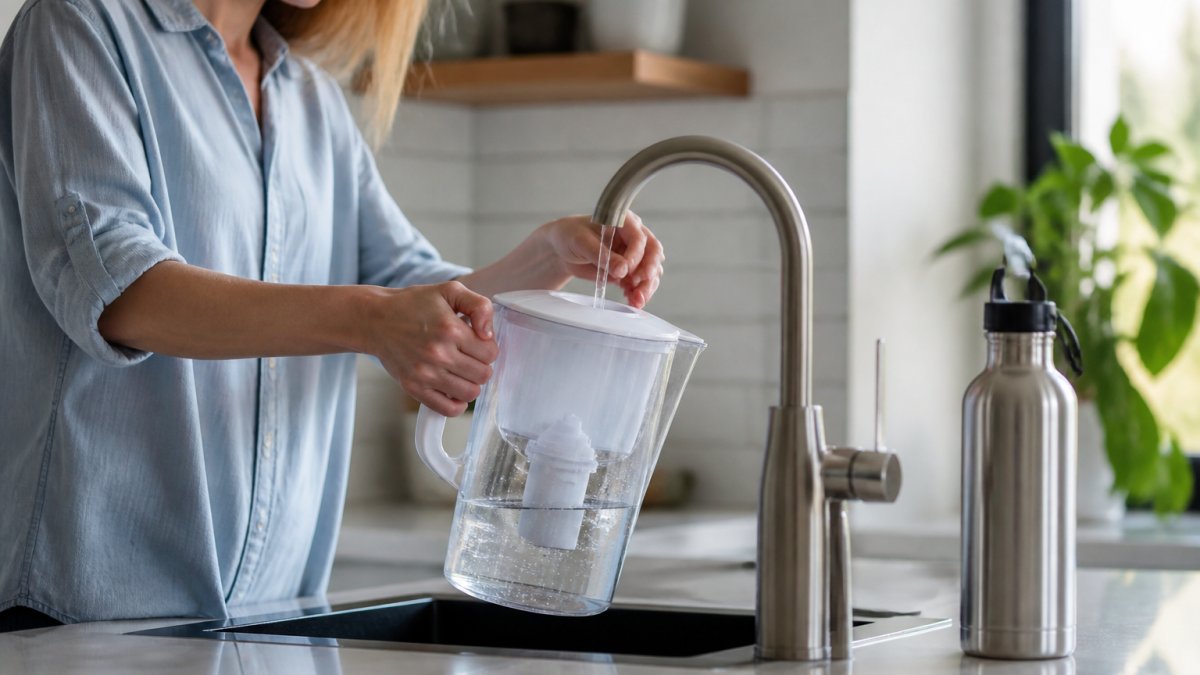
Look for these features when comparing water filters that remove microplastics:
- Submicron filtration rated to 0.2 microns or smaller traps plastic fragments
- Multi-stage systems combining carbon, ion exchange, and membrane layers
- Independent lab reports confirming particle removal rates
- Replacement filter lifespan measured in litres, not guesswork
- BPA, BPB, and BPS free construction, so the filter itself adds nothing back
Gravity-fed jugs and bench top systems suit renters because they need no plumbing. Waters Co builds multi-stage systems with submicron filtration that remove up to 99.9% of contaminants, including microplastics.

How to Verify Water Filter Lab Testing
A filter claim means nothing without proof. How to verify water filter lab testing comes down to three checks: who ran the test, what standard they used, and whether the report is public.
Ask the manufacturer for:
- The testing lab's name and accreditation status
- The specific standard applied, such as NSF/ANSI 42, 53, or 401
- The full report, not a marketing summary
- The test conditions, including water source and flow rate
- The date of testing, since old results may not reflect current stock
Be wary of brands that show a badge but no document. A genuine report lists the contaminant, the challenge level, and the percentage removed.
Waters Co publishes independent testing for its multi-stage systems, which is one reason health professionals recommend them.
How to Reduce Plastic Exposure from Food
Food and drink are widely considered the dominant exposure route for microplastics and nanoplastics, and the kitchen is where most of the controllable risk sits. The key variables are the same ones food scientists use when testing packaging migration: temperature, fat content, acidity, contact time, and physical abrasion. Change any of those and you change how much plastic ends up in your meal.
Why heat, fat and acid matter most
Plastic polymers are not inert. Warm them, and the polymer chains move more freely; expose them to fats or acids, and additives and oligomers migrate more readily into the food.
A widely cited 2023 study published in Environment International found that microwaving food in plastic containers could release millions of micro- and nanoplastic particles per square centimetre of container surface. The exact numbers are debated, but the direction of the effect, heat plus plastic equals more particles, is consistent across the literature.
Practical swaps, ranked by how much they cut exposure
- Never reheat food in plastic. Decant into glass, ceramic or stainless steel first. This is the single highest-impact kitchen change.
- Store leftovers in glass or stainless steel. Borosilicate glass and 18/10 stainless steel do not shed polymer fragments. Kilner-style jars and stainless bento boxes are cheap and widely available.
- Choose wooden, metal or silicone utensils. A worn non-stick or plastic spatula sheds flakes directly into the pan. Replace anything scratched or flaking.
- Cut plastic teabags and coffee pods. Many mainstream tea bags in the UK still contain a polypropylene seal, and single-use pods are a known source of particles in the brew. Loose-leaf tea in a stainless infuser and a paper-filter or French-press coffee routine sidestep both.
- Rinse canned goods. Cans are lined with an epoxy or polyester coating that can shed into the contents, especially acidic foods like tomatoes. A quick rinse reduces surface residue.
- Buy loose produce where you can. Plastic-wrapped fruit and veg is a minor route compared with heating, but it is easy to avoid and reduces overall plastic contact.
- Avoid plastic chopping boards for raw meat and acidic foods. Knife scoring releases microplastics over time; a wooden or bamboo board is a low-cost swap.
What not to bother with
Some advice circulating online is not well supported. Replacing plastic water bottles with glass bottles for cold drinks, for example, makes little measurable difference compared with the gains from filtering tap water. Similarly, avoiding all canned food is disproportionate; rinsing and choosing fresh or frozen alternatives where practical is enough.
If you only change one thing in the kitchen, stop heating food in plastic. If you change two, add glass or stainless steel storage. Those two steps remove the largest controllable exposure source for most households.
Bottled vs Tap Water: Which Has Fewer Microplastics?
Tap water usually wins, and by a wide margin. Multiple studies have found bottled water contains more microplastic particles than tap, largely because the plastic bottle itself sheds fragments into the liquid.
So the counterintuitive answer is this: if you want to reduce microplastics, stop buying bottled water. Filter your tap instead.
AceBio+ 1.0 Litre Alkaline Mineral Water Filter Jug →
| Option | Microplastic Risk | Cost | Waste |
|---|---|---|---|
| Bottled water | Higher | Ongoing, high | High |
| Unfiltered tap | Moderate | Lowest | None |
| Filtered tap | Lowest | Low after setup | None |
A gravity jug or bench top filter gives you bottled-quality taste without the bottle. Waters Co systems work out at around 3 pence per litre, compared with the ongoing cost of bottled water.
Evidence Quality and Health Uncertainty
Most guides either overstate the risk ('microplastics are poisoning you') or wave it away ('the science isn't in yet'). Neither is useful. What follows is a plain-English guide to reading the evidence, so you can judge claims for yourself.
What the research actually shows
There are three broad tiers of evidence, and they carry very different weight:
- Detection studies confirm that microplastics and nanoplastics are present in human blood, lung tissue, placenta and breast milk. These are strong and widely replicated. They tell us exposure is real, not what it does.
- Observational studies look for correlations between measured body burden and health outcomes. These are suggestive but cannot prove cause and effect, and they are often small.
- Mechanistic and animal studies explore how particles might cause harm, inflammation, oxidative stress, endocrine disruption from additives. Findings in cells or rodents do not translate directly to humans at real-world doses.
When you see a headline, ask which tier it comes from. A detection study is not evidence of harm. An animal study at high dose is not evidence of harm at everyday exposure.
Why the numbers vary so much
Reported particle counts differ by orders of magnitude between studies. That is not because one lab is wrong, it is because of methodological differences:
- What is counted. Some methods detect particles above 1 micron; others push down to nanoscale, where counts explode.
- Sample handling. Plastic lab equipment, gloves and even airborne dust in the lab can contaminate samples.
- Reporting units. Particles per litre, per gram, per kilogram of body weight, these are not interchangeable.
- Detection limits. A study that cannot see below 10 microns will report far fewer particles than one that can see to 1 micron.
This is why you should treat any single dramatic figure with caution. The trend across studies matters more than any one number.
What we can say with reasonable confidence
- Exposure is widespread and effectively unavoidable at some level.
- Reducing intake is a sensible precaution, not a proven intervention.
- The changes with the best evidence-to-effort ratio are the ones that cut the largest sources: drinking water and food-contact plastics.
- No regulatory body has yet set a health-based limit for microplastics in drinking water, because the dose-response relationship is not established.
How to read a microplastics headline
A short checklist:
- Who ran the study, and where was it published? Peer-reviewed journals carry more weight than press releases.
- What was measured, presence, or effect? Presence is not harm.
- What dose and route? A cell-culture study at 1000x environmental concentration tells you little about your kitchen.
- How many participants or samples? Small n means wide uncertainty.
- Who funded it? Industry-funded studies are not automatically wrong, but disclosure matters.
Be sceptical of any product or article that claims a specific percentage reduction in 'microplastics' without naming the test method, the particle size range, and the lab that ran it. Those three details are the minimum for a credible claim.
The precautionary case
Uncertainty cuts both ways. It is not a reason to ignore the issue, and it is not a reason to panic. The actions that reduce microplastic intake, filtering water, avoiding plastic food storage, cutting single-use plastics, are low-cost, low-risk and independently beneficial for other reasons (less waste, fewer additives, better hydration habits). That is the definition of a sensible precaution: act where the downside of acting is small and the potential upside is real.
Prioritising Actions by Impact, Cost, and Effort
Not every change is worth the same effort, so prioritise by impact, cost, and effort. Start with the actions that remove the most exposure for the least money and hassle.
| Action | Impact | Cost | Effort |
|---|---|---|---|
| Filter drinking water | High | Low-medium | Low |
| Swap plastic food storage | High | Low | Low |
| Stop buying bottled water | High | Saves money | Low |
| Reduce plastic utensils | Medium | Low | Low |
| Dust and vacuum often | Medium | Low | Medium |
| Avoid plastic-wrapped food | Medium | Medium | Medium |
Work down the list as time and budget allow. The first three rows deliver most of the benefit.
Waters Co has spent over 40 years refining gravity-fed filtration, and our customers rate us 4.9 out of 5 from more than 2,600 reviews. Our filters last up to two years, which keeps the yearly cost low.
Frequently Asked Questions
Does filtering tap water remove microplastics?
Yes, certain water filters can remove microplastics. Look for filters with submicron filtration, often rated at 0.2 microns or smaller. Waters Co systems, for example, use multi-stage filtration that captures particles down to that size. Always check the product's lab testing data to confirm removal rates for microplastics and other contaminants.
Can boiling water reduce microplastics?
Boiling water does not reliably remove microplastics. In fact, heating plastic containers or pipes can release more microplastics into the water. Boiling may kill bacteria, but it won't eliminate plastic particles. For microplastic reduction, use a certified water filter instead of relying on boiling.
Are bottled water or tap water more likely to contain microplastics?
Bottled water generally contains more microplastics than tap water. Studies have found that bottled water can have double the microplastic concentration of tap water, partly due to the plastic packaging and bottling process. Tap water is not microplastic-free, but filtering it at home reduces both microplastics and plastic waste.
Can the body get rid of microplastics?
The body can excrete some microplastics through urine and faeces, but not all particles are removed. Smaller particles may cross into the bloodstream and accumulate in organs. While research is ongoing, reducing intake is the most effective way to lower your body's burden. Filtering water and avoiding plastic food containers are practical first steps.
Cutting microplastics out completely is not realistic, but cutting the biggest sources is. Start with your drinking water, since it is the simplest daily fix with the clearest payoff. Waters Co builds multi-stage filtration systems that remove up to 99.9% of contaminants including microplastics, come with a lifetime warranty, and last up to two years per filter set. Get started with Waters Co and pour cleaner, better-tasting water from your own tap.