

Choosing the Right Mineral Filter for Your Water Jug
Last Updated: November 5, 2026
Quick Summary
To choose the right mineral filter for your water jug, test your tap water first for hardness, chlorine and contaminants, then pick a cartridge that matches those results. Mineral-retaining cartridges keep existing calcium and magnesium, while mineral-adding cartridges re-mineralise soft water. Always confirm the cartridge fits your exact jug model and has third-party test data behind its claims.
- Test your water for hardness, chlorine and contaminants before shopping for any cartridge.
- Above roughly 200 mg/L of calcium carbonate counts as hard water in most UK supplies.
- Mineral-retaining cartridges suit moderately hard water; mineral-adding cartridges suit soft water.
- Confirm the cartridge model number matches your jug exactly, character for character.
- A standard jug usually needs a cartridge change every two to three months, or sooner in hard water.
Table of Contents
- Start With Your Water Test, Not the Filter
- What a Mineral Filter Actually Removes and Retains
- Mineral-Retaining vs Mineral-Adding Cartridges
- Picking a Water Filter Jug for Hard Water
- Water Filter Cartridge Compatibility Checks
- Water Jug Filter Cartridge Replacement and Lifespan
- Water Filter Jug Cost Comparison Over Time
- Match Your Jug to Your Household Before You Buy
- Frequently Asked Questions
Start With Your Water Test, Not the Filter
Most people buy a jug first and hope for the best. That is backwards.
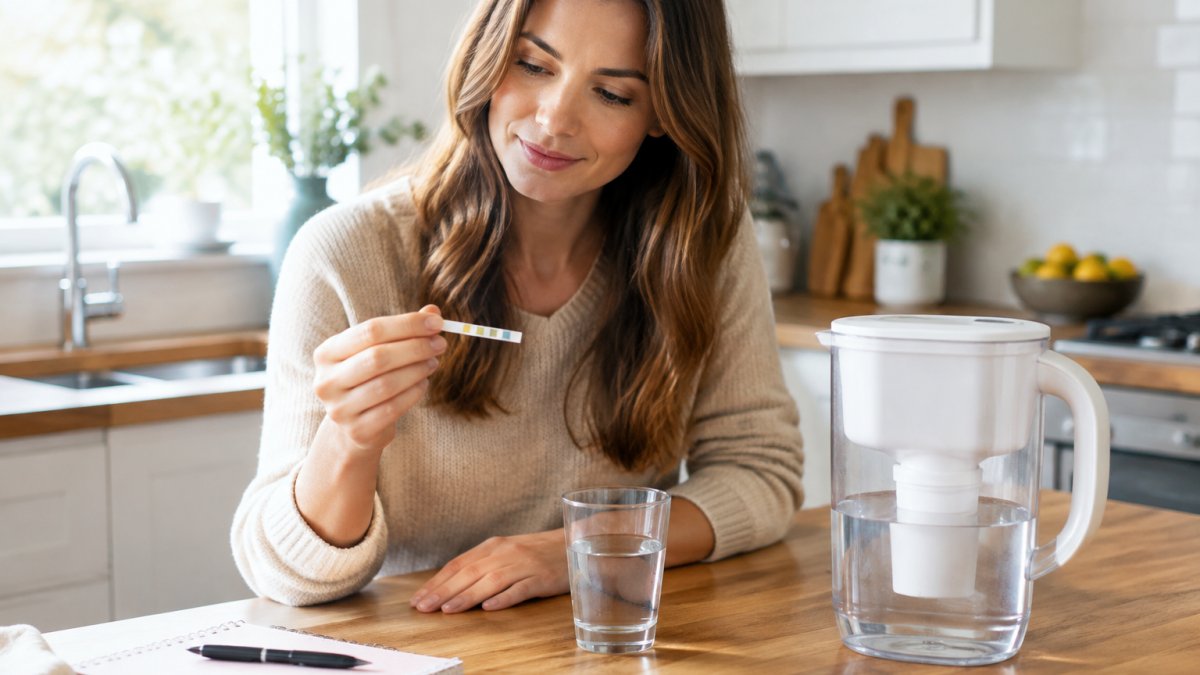
Your water supplier publishes a free annual water quality report covering hardness, chlorine and any contaminants detected in your area.
If you want to go further, our guide on how to test tap water quality walks through the full process step by step.
Reading Hardness, Chlorine and Contaminant Results
Hardness is measured in milligrams per litre of calcium carbonate (Water Hardness / Hard Water). Above roughly 200 mg/L counts as hard water in most UK supplies, which is where limescale and dull taste come from.
Write down three numbers before you shop: hardness, chlorine level and any flagged contaminant. Those three decide which cartridge type you need.
What a Mineral Filter Actually Removes and Retains
A mineral filter is a cartridge that reduces unwanted substances while keeping or adding beneficial minerals such as calcium and magnesium. That is the short answer.
Most quality cartridges combine activated carbon with ion exchange and a pre-filter membrane.
Some cartridges strip nearly everything, including the calcium and magnesium your body uses. Our guide to whether mineral water filters are worth it explains the trade-offs in more depth.
The key point: a mineral filter should leave you with cleaner water that still tastes good and still contains useful minerals.
Mineral-Retaining vs Mineral-Adding Cartridges
Here is where most buying guides get vague.
Mineral-retaining cartridges keep the calcium and magnesium already in your tap water, removing chlorine and contaminants while leaving natural mineral content largely intact.
Mineral-adding cartridges re-mineralise water with trace minerals after filtration, often raising pH slightly.
Neither is universally better. It depends on your test results. If your water is already mineral-rich, retaining is enough.
What Mineral Claims Mean and What They Do Not
Be careful with labels. "Alkaline," "ionised" and "mineral-rich" are marketing terms with no single legal definition. What matters is the actual mineral content and the lab test behind the claim.
Ask for third-party test results. A reputable brand will publish them. Treat any mineral claim without a test result as unproven.
Picking a Water Filter Jug for Hard Water
Hard water is the single biggest reason people give up on jugs: cartridges clog with limescale, flow slows to a trickle, and the water still tastes chalky.
Look for a jug with a dedicated limescale or ion-exchange stage. Check the stated cartridge life too, because hard water shortens it.
Our AceBio+ 1.0 litre alkaline mineral water filter jug is a good fit for households who want mineral-rich filtered water without installation.

Water Filter Cartridge Compatibility Checks
Not every cartridge fits every jug. Mismatched cartridges are one of the most common returns we see. Compatibility is not just about whether the cartridge clicks into place, but whether it is tested to do what the box claims, at the capacity stated, for the jug you own. Work through the checks below before buying a replacement.
Fit and housing checks
Start with the physical match. Confirm four things before you pay:
- The cartridge model number matches your jug exactly, not just the brand family
- The housing diameter and seal type are the same as the original cartridge
- The jug maker lists your jug model as compatible with that cartridge
Check the model number on the jug base against the cartridge box. They should match character for character. Some jugs accept third-party cartridges; many do not. If a seller cannot confirm compatibility in writing, walk away.
Watch out: a cartridge that fits loosely may still appear to work because water flows through, but the bypass means the water is only partly filtered.
Stated capacity and cartridge life
Capacity claims vary widely and are not directly comparable between brands. Check what the figure refers to: litres treated, months in service, or both.
Match stated capacity to your household's real daily use. A one-litre jug used by two people drinking two litres each per day passes roughly four litres a day through the cartridge, so a 300-litre cartridge lasts about 75 days; in a single-person household it lasts twice as long.
AceBio+ 1.0 Litre Alkaline Mineral Water Filter Jug →
Reduction claims and certification
This is the check most buyers skip. A cartridge should state which contaminants it reduces and by how much, and that claim should be backed by test data. Look for:
- A named list of substances the cartridge reduces, such as chlorine, lead or limescale-forming calcium carbonate
- The percentage reduction claimed for each substance
- The test conditions, including the water hardness and the volume treated before the claim was measured
A reputable brand will publish its test data so you can see exactly what a cartridge removes and what it leaves behind. Treat any reduction claim without a test result as unproven. This matters most for mineral filters, because the same cartridge makes two claims at once: that it reduces unwanted substances and that it retains or adds minerals.
Replacement availability before you commit
A jug is only as good as its cartridge supply. Before you buy, confirm replacement cartridges are in stock from the maker and at least one mainstream retailer, and check the price of a replacement set against the price of the jug. A cheap jug with expensive or hard-to-find cartridges is a false economy. If the cartridge is a proprietary design, confirm the maker has a published replacement schedule and a track record of keeping cartridges available after the jug model is discontinued.
A short compatibility checklist
Before purchase, confirm all of the following:
- Jug model and cartridge model match exactly
- Housing and seal type match the original
- Stated capacity in litres and months is clear and plausible for your daily use
If any line cannot be ticked, keep looking. The right cartridge is the one that fits, is tested to do the job, and can be replaced without a hunt.
Water Jug Filter Cartridge Replacement and Lifespan
How often you replace the cartridge depends on water quality and daily use, but the more useful question is how the cartridge behaves as it ages. A filter does not fail suddenly at a fixed date; its performance drifts. Understanding that drift tells you when replacement is genuinely warranted rather than when the calendar says so.
What changes as a cartridge is used
Three things shift over a cartridge's life, and each gives you a signal.
Flow rate. As sediment, rust and limescale collect in the pre-filter and carbon stages, the path through the cartridge narrows and flow slows.
Capacity. The stated capacity, whether in litres or months, is a limit, not a guarantee of constant performance.
Mineral output. This is where mineral filters differ from standard carbon cartridges.
Reading the signs
Replace the cartridge when any of these appear:
- Flow slows noticeably compared with a new cartridge
- Taste or odour returns, especially a chlorine smell
- The recommended volume or time limit is reached, whichever comes first
Ignoring replacement is worse than not filtering at all, because a spent cartridge can harbour bacteria and may release some of what it has collected. The time limit matters as much as the volume limit: a cartridge that has sat in a jug for months with light use still needs replacing on schedule.
Setting a realistic replacement schedule
Track the install date and the volume passed through each cartridge, then set a reminder for whichever limit arrives first. Longer-life cartridges change the arithmetic: a set rated for 4,800 litres or 24 months, such as the AceBio+ 1 litre replacement filter set, is replaced on a 24-month schedule with a main filter plus carbon and pre-filter stages swapped on their own intervals.

Watch out: a cartridge that is still within its time limit but has processed its full rated volume is spent, and continuing to use it gives you unfiltered or partly filtered water at full cartridge cost.
When to replace early
Replace ahead of schedule if you notice any of the following:
- A sudden change in tap-water quality, such as after supply work or flooding
- A noticeable drop in flow within weeks of fitting a new cartridge, which can indicate heavy sediment
- Cloudiness or particles in the filtered water
Early replacement costs more per litre but protects the reason you bought the jug. If you find yourself replacing well before the stated capacity, check whether a cartridge designed for harder water or higher volume would suit your supply better.
Water Filter Jug Cost Comparison Over Time
Upfront price tells you little. What matters is cost per litre across the life of the jug. Here is how the main options compare on running cost.
| Option | Upfront | Cartridge Life | Approx. Cost Per Litre | Best For |
|---|---|---|---|---|
| AceBio+ 1L jug | £125.00 | Up to 4,800 L / 24 months | Lowest long-term | Hard water, mineral-rich water |
| AceBio+ replacement set | £110.00 | Up to 4,800 L / 24 months | Low | Ongoing running cost |
| MyWaterJug 1.5L | £64.99 | Up to 300 L / 3 months | Moderate | Budget, portable use |
| MyWaterJug twin filters | £49.00 | Up to 300 L each | Moderate | Frequent cartridge swaps |
For a deeper breakdown, see our guide to long-term water filter maintenance costs.
Match Your Jug to Your Household Before You Buy
The last decision is the simplest and most overlooked: size. A one-litre jug suits one or two people; a family of four drinking two litres each per day will empty it constantly.
Ask yourself:
- How many people drink filtered water daily?
- Will it live in the fridge, and does it fit?
- Do you need it portable for travel or the gym?
Match capacity to real daily use, not to the biggest jug on the shelf. A jug that is too small gets abandoned; one that is too large takes up fridge space you do not have.
Frequently Asked Questions
What does a mineral filter do in a water jug?
A mineral filter does two jobs at once. It removes contaminants such as chlorine, heavy metals and fluoride through carbon-based media, then releases trace minerals back into the water. In practice this means better taste, less odour and water that is slightly alkaline rather than flat. The exact balance depends on the cartridge: some retain the minerals already in your tap water, while others add minerals from a built-in mineral compound. Check the cartridge specification to see which approach it uses and what it removes.
Do water jug filters add minerals to tap water?
Some do, some do not. Mineral-adding cartridges contain a mineral compound that releases calcium, magnesium and trace elements into the filtered water. Mineral-retaining cartridges leave the naturally occurring minerals in your supply untouched while stripping out chlorine and heavy metals. If your tap water is already hard and mineral-rich, a retaining cartridge is usually enough. If your supply is soft or you want a specific mineral profile, an adding cartridge makes more sense. Read the product listing carefully, because the two types are often sold in similar-looking jugs.
Which water jug filter is best for hard water?
For hard water, look for a cartridge that lists limescale reduction as well as chlorine reduction, and check the stated claims for that cartridge. A jug with a larger reservoir also helps, because you will refill it more often in a hard-water household. Test your supply first: a simple hardness strip tells you whether you are dealing with moderate or very hard water, and that result should decide how much you spend on scale reduction.
Are all water jug filter cartridges interchangeable?
No. Cartridge compatibility is specific to the jug model, and fitting the wrong one can cause leaks, poor flow or no filtration at all. Before buying a replacement, match the cartridge code to your jug and check the manufacturer's listing. Some jugs accept only their own branded cartridges, while others share a standard fitting. If you are switching brands, confirm the physical dimensions, the seal type and the stated filter lifespan. Buying a compatible set from the same maker as your jug is the safest route.
Choosing the right mineral filter for your water jug comes down to testing your water, matching cartridge type to your results, and checking compatibility before you buy. Waters Co has been filtering water since 1984, with over 67,000 customers and a 4.9-star average from 2,656 reviews. Our jugs remove up to 99.9% of contaminants, re-mineralise with essential minerals, and come with a lifetime warranty. Get started with Waters Co and enjoy cleaner, better-tasting mineral water every day.
