

Are Mineral Water Filters Worth It? A 2026 Guide
Table of Contents
- What Mineral Water Filters Actually Do
- The Benefits of Alkaline Water Filters for Health and Hydration
- Cost of Filtered Water vs Bottled Water: The Real Numbers
- How to Maintain an Alkaline Water Filter for Longevity
- Mineralisation vs Demineralisation: What Most Guides Skip
- Microplastics, Limescale and the Contaminants That Matter
- Is a Mineral Water Filter Worth It for Your Home?
- Frequently Asked Questions
Last Updated: September 11, 2026
What Mineral Water Filters Actually Do
Mineral water filters are water treatment systems that remove contaminants from tap water while adding or retaining beneficial minerals such as calcium, magnesium and potassium. At Waters Co, we've spent four decades refining this process because the difference between stripped, dead water and mineral-rich living water matters more than most people realise.
The core job is straightforward: filter out what shouldn't be there, keep or restore what should.
Filtration Stages Explained Without the Chemistry Lesson
A typical multi-stage mineral water filter works through three broad phases:

- Sediment and pre-filtration captures physical particles, rust and debris
- Carbon and ion exchange removes chlorine, chemical residues and heavy metals
- Mineralisation and alkalisation reintroduces beneficial minerals and adjusts pH
Submicron filtration sits within this stack, catching particles smaller than a micron, which is where microplastics and many chemical residues get stopped. According to the Drinking Water Inspectorate's guidance on tap water quality, while public supplies meet safety standards, contaminants can still enter between treatment works and your tap.
The practical difference between a basic jug and a proper multi-stage system comes down to how many of these stages are present and how well they perform over time.
The Benefits of Alkaline Water Filters for Health and Hydration
Alkaline water filters do two things at once: they clean the water and they shift its mineral profile. For hydration, that mineral content matters. Water carrying calcium and magnesium supports electrolyte balance in a way that demineralised water cannot match.
What the Evidence Supports and What It Does Not
Honest answer: the evidence for everyday hydration and taste improvement is solid. The evidence for dramatic athletic performance gains is thinner.
Many athletes report feeling better hydrated on mineral-rich water, and the logic holds, minerals aid absorption. But claims that alkalised water transforms recovery are overstated in most marketing. The NHS guidance on hydration is clear that staying properly hydrated matters most; the mineral source is secondary.
What I'd tell a sceptical buyer: treat mineral water filters as a hydration and taste upgrade first, and a wellness bonus second. That framing is defensible. The other framing isn't.
Cost of Filtered Water vs Bottled Water: The Real Numbers
Filtered water wins on cost, and it isn't close, but the useful version of that claim is a per-litre calculation, not a slogan. The table below shows the shape of the comparison; the numbers that follow explain how to fill it in for your own household.
| Option | Upfront Cost | Ongoing Cost | Cost Per Litre Over Time |
|---|---|---|---|
| Bottled water | None | Weekly purchases | Highest |
| Basic jug filter | Low | Frequent cartridges | Moderate |
| Multi-stage mineral filter | Higher | Long-life cartridges | Lowest |
How to Run the Maths for Your Own Kitchen
Three inputs decide the answer:
- Your household's daily drinking water volume. A single adult typically drinks around two litres a day; a family of four lands near eight litres once cooking and hot drinks are included.
- The cost per litre of your current source. Supermarket own-brand bottled water sits at the cheap end; branded still water sits considerably higher. Check your last receipt and divide by the bottle size.
- The cost per litre of the filter, including cartridges. Take the system price, add the replacement cartridges you'll buy over two years, then divide by the total litres produced.
A common pattern: households that buy bottled water weekly usually find a multi-stage system pays for itself within the first year, and a basic jug takes longer because cartridges are replaced more often. The break-even point moves in favour of the filter as household size grows.
Where the Hidden Costs Sit
Upfront price is the least interesting number. The costs that actually change the verdict are:
- Cartridge frequency. A jug with a short replacement cycle can cost more over two years than a system with a higher sticker price and long-life cartridges.
- Wastage. Some filtration technologies reject a portion of the input water. If yours does, factor that into the litres you actually get per cartridge.
- Appliance protection. In hard water areas, scale buildup shortens kettle and washing machine life. A filter that reduces scale is partly paying for itself through avoided repairs and lower energy use, a saving that never appears on a water bill.
- Delivery and storage. Bottled water carries a delivery, storage and recycling overhead that tap-based filtration avoids entirely.
Waters Co's AceBio+ 1.0 Litre Alkaline Mineral Water Filter Jug starts at £125.00, and the BIO 400 5.25 Litre Bench Top system at £329.00. Both are designed around long-life filters, which changes the maths considerably. A basic jug seems cheap until you're replacing cartridges every few months.

The real question isn't upfront price. It's cost per litre over two years, and that's where mineral systems pull ahead of both bottled water and short-cycle jugs.
How to Maintain an Alkaline Water Filter for Longevity
Maintaining an alkaline water filter comes down to cartridge discipline and clean housing. Neglect either and filtration efficiency drops before you notice a taste change, which is exactly why taste is a poor maintenance signal.
Why Each Step Matters
- Replace cartridges on the manufacturer's interval, not when water tastes off. Carbon media exhausts gradually. By the time chlorine breaks through and you can taste it, the cartridge has usually been underperforming for weeks.
- Rinse the housing monthly with cool water. Biofilm and sediment collect in the housing even when the cartridge is fine. A monthly rinse keeps the contact surfaces clean between replacements.
- Store jugs away from direct sunlight. UV and heat accelerate media degradation and can encourage microbial growth in standing water.
- Run a full cycle after any period of non-use. Water sitting in the housing for days is the most common cause of off-taste complaints after a holiday.
- Check flow rate monthly. A slowdown signals clogging in the sediment stage. If flow drops noticeably before the cartridge is due, the pre-filter is doing its job, but it may need earlier attention.
Test Before You Buy, and Test Again After
Most guides skip this step, and it's the one that saves the most money. Before committing to a filtration system, find out what's actually in your tap water.
A practical DIY testing sequence:
- Start with your supplier's published water quality report. Every water company in the country publishes a annual quality report by postcode area. This tells you hardness, chlorine residual and any regulated parameters of note.
- Test hardness first. Inexpensive test strips give a rough reading; a drop-count kit gives a more precise one. Hardness determines whether limescale protection is a real benefit for you or a non-issue.
- Test for chlorine and pH. These are the two parameters most likely to affect taste, and both are cheap to check at home.
- Consider a laboratory test if you have specific concerns. If you're on a private supply, or you've had plumbing work done, a laboratory analysis covers heavy metals and microbial parameters that strips cannot.
- Re-test after installing the filter. This confirms the system is doing what you bought it for. A filter that doesn't change your test results isn't earning its place on the counter.
This sequence matters because filtration is not one-size-fits-all. A household in a soft water area with good chlorine control may need nothing more than a basic carbon jug. A household in a hard water area with older pipework has a genuinely different case for a multi-stage system.
Waters Co systems use long-life filters lasting up to two years, which reduces replacement frequency and cost. That longer cycle is one of the main reasons maintenance stays manageable, but it only pays off if the cartridge is matched to the contaminants your water actually contains.
Mineralisation vs Demineralisation: What Most Guides Skip
This is the gap in most guides. Reverse osmosis strips almost everything from water, including the minerals your body actually wants. Demineralised water is clean, but it's also flat and mineral-poor.
Mineralisation reverses that. After filtration removes contaminants, minerals are reintroduced, restoring calcium, magnesium and potassium. The result is water that hydrates well and tastes better.
The trade-off: remineralisation adds a stage, which adds cost. Whether that's worth it depends on your priorities. If you're filtering mainly for taste, a simpler carbon system may suffice. If you want the health and hydration angle, mineralisation is the point.
Microplastics, Limescale and the Contaminants That Matter
Microplastics and limescale are the two contaminants people ask about most, and both are addressable with the right filtration.
Microplastics are tiny plastic fragments now found widely in water sources. Submicron filtration catches many of them, though effectiveness varies by system design. Limescale, meanwhile, is a hardness issue. Hard water leaves mineral deposits that clog kettles, damage appliances and affect mouthfeel.
Ion exchange softens hard water by swapping calcium and magnesium ions for sodium. This reduces scale buildup and protects appliances. For households in hard water areas, that protection alone often justifies the investment.
Is a Mineral Water Filter Worth It for Your Home?
For most households, yes, provided you're buying for the right reasons. Cleaner water, better taste, lower long-term cost than bottled, and reduced plastic waste all stack up. If your priority is removing contaminants while keeping minerals, a mineral water filter is worth it.
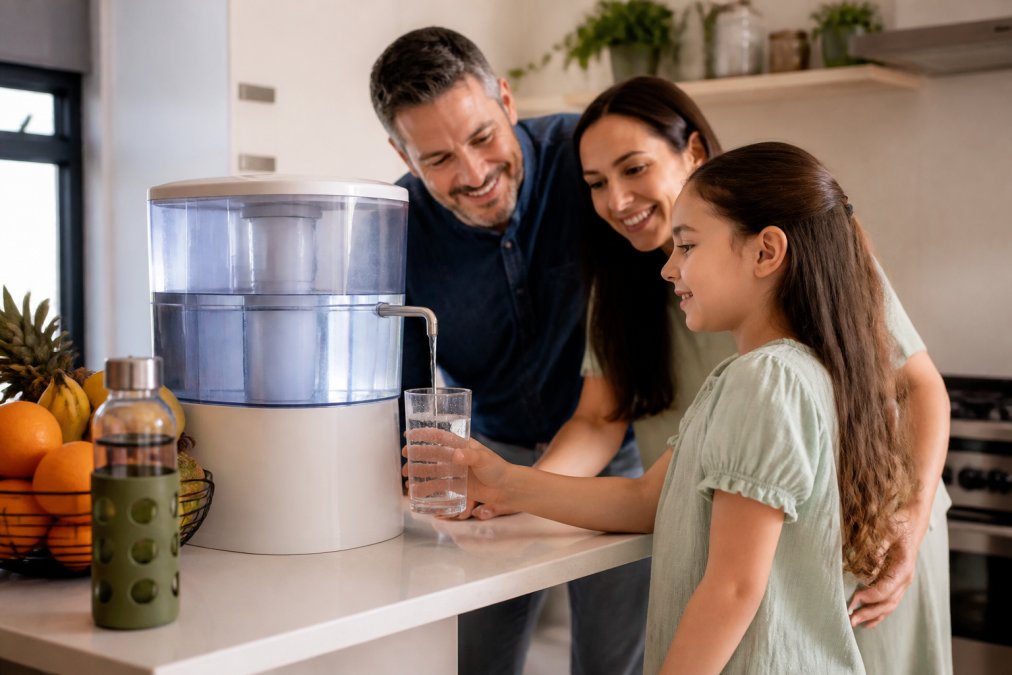
Waters Co's range fits different needs. The ♥MyWaterJug 1.5L at £64.99 suits renters wanting a budget entry point. The Mini BMP Waterman 600ml Black at £49.99 works for on-the-go hydration. For families, the BIO 400 bench top handles volume without plumbing.
Where it falls short: if you're happy with tap water taste and have no contaminant concerns, a mineral filter is a want, not a need. Be honest about which camp you're in.
For those who want the health and sustainability benefits, Waters Co has served 67,000+ customers with a 4.9-star average across 2,656 reviews. The Environment Agency's guidance on plastic waste reduction supports the environmental case for ditching single-use bottles.
Frequently Asked Questions
Do mineral water filters remove essential nutrients from drinking water?
Most mineral water filters do not strip beneficial minerals. Carbon and ion exchange stages target chlorine, heavy metals and microplastics, while remineralisation stages add calcium and magnesium back into the water. Reverse osmosis is the exception because it removes nearly everything, which is why remineralisation cartridges are often paired with it. If you want to keep or boost mineral content, look for a system that explicitly states it remineralises.
Which is better, mineral water or filtered water?
They serve different purposes. Bottled mineral water has a consistent mineral profile but carries a high cost and plastic waste. A mineral water filter gives you similar mineral content from your tap at a fraction of the price, with the added benefit of removing contaminants bottled water may still contain. For daily hydration, a filter is the more practical and cost-effective choice.
What is the cost of filtered water vs bottled water over a year?
A household drinking two litres per person per day can spend several hundred pounds annually on bottled water. A filter jug at £64.99 or a bench top system at £329.00, plus replacement cartridges, typically costs far less over 12 months. The exact saving depends on household size and how often you replace cartridges, but the gap widens the longer you use the filter.
How often do I need to replace the filter cartridges?
It depends on the system. Portable jugs generally need a new cartridge every one to three months, while larger bench top filters can last up to two years. Check your water hardness and daily usage, as hard water and heavy use shorten cartridge life. Setting a calendar reminder when you install the filter helps you stay on schedule and protects filtration efficiency.
The challenge is simple: most households are either overpaying for bottled water or settling for tap water that doesn't meet their standards. Waters Co bridges that gap with multi-stage filtration that removes up to 99.9% of contaminants, remineralises for better hydration, and delivers long-life filters lasting up to two years. Get started with Waters Co and turn your tap into a source of clean, mineral-rich water your whole household can rely on.