

Buy Alkaline Water Filter System: 2026 Review
Table of Contents
- Alkaline Water Filter Systems Compared: Prices, Specs and Pros
- AceBio+ 1.0 Litre Jug: Best for Renters and Small Spaces
- BIO 400 and BIO 500 Bench Top Filters: Best for Families
- BIO 400 MAX and BIO 500 MAX: Best for High-Volume Households
- MyWaterJug and Waterman: Best for Budget and Travel
- Alkaline vs Reverse Osmosis Water Filters: Which Suits Your Home?
- Cost of Alkaline Water Filter Replacement Cartridges
- How to Maintain an Alkaline Water Filter for Longevity
- Frequently Asked Questions
Last Updated: September 21, 2026
Alkaline Water Filter Systems Compared: Prices, Specs and Pros
Waters Co's alkaline water filter system range spans £49.99 to £349.00, from a 600ml portable bottle to a 7 litre bench top unit. The company has built gravity-fed alkaline mineral water systems since 1984, and the line-up splits into four jobs: portable hydration, small-space filtration, family bench tops, and high-volume households.
This review compares every model on price, capacity, filter lifespan and running cost, and breaks down which system suits renters, families and heavy users.
The short answer: a portable bottle or jug covers one or two people. A bench top filter covers a household. And the cost per litre drops sharply as capacity rises.
| Model | Price | Capacity | Filter Life | Best For |
|---|---|---|---|---|
| AceBio+ Jug | £125.00 | 1.0 litre | Up to 4,800L / 24 months | Renters, small spaces |
| BIO 400 / BIO 500 | £329.00 | 5.25 litre | Up to 12,000L / 18 months | Families |
| BIO 400 MAX / BIO 500 MAX | £349.00 | 7 litre | Up to 12,000L / 18 months | High-volume households |
| MyWaterJug | £64.99 | 1.5 litre | Up to 300L / 90 days | Budget |
| Waterman | £49.99 | 600ml | Up to 300L / 3 months | Travel, gym |
How We Evaluated These Systems
We scored each system on upfront price, filter lifespan in litres, capacity against household size, and cost per litre over the filter's life, plus practical factors like plumbing needs, counter space and cartridge swaps.

Every model here is gravity-fed. None needs electricity or a tap connection, which matters if you rent or move often.
AceBio+ 1.0 Litre Jug: Best for Renters and Small Spaces
The AceBio+ suits renters who cannot touch the plumbing. At £125.00, it delivers the same 10-stage filtration architecture as the larger units in a 1.0 litre footprint, with no installation or tap connection.
It uses a pre-filter membrane for sediment, rust and cysts, silver-bonded coconut shell carbon for chlorine, chemicals and heavy metals, and a patented nano activated carbonate compound for fluoride reduction, adding around 60 bio-organic trace minerals and organic germanium.
The included filter set lasts up to 4,800 litres or 24 months, exceptional for a jug, where most need changing every few months.
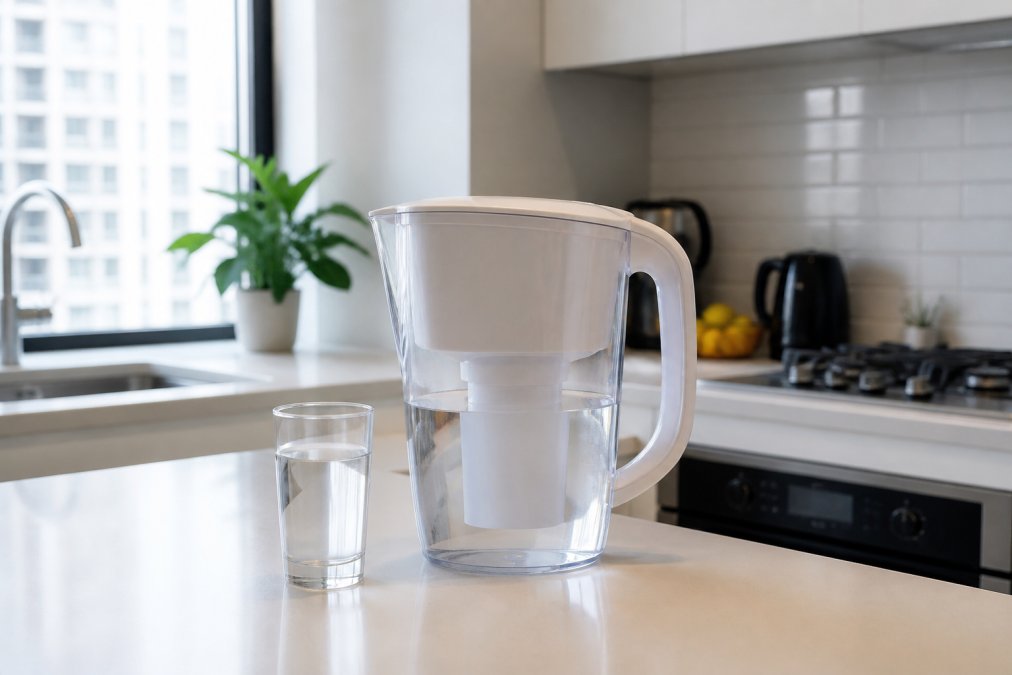
Where it falls short: 1.0 litre is a personal capacity. A family of four will refill it constantly. For one or two people, it is the best-value entry into alkaline filtration.
BIO 400 and BIO 500 Bench Top Filters: Best for Families
The BIO 400 and BIO 500 are the same 5.25 litre system in different finishes, both £329.00, the models most households should buy.

Both run 13 stages of filtration and activation, producing water with a pH typically between 7.6 and 8.2.
The fluoride claim is worth noting. Waters Co uses nano activated carbon for fluoride removal.
The included filter set lasts up to 12,000 litres or 18 months, at around 3 pence per litre.
AceBio+ 1.0 Litre Alkaline Mineral →
BIO 400 MAX and BIO 500 MAX: Best for High-Volume Households
The MAX versions add capacity without changing the filtration. Both are £349.00 with a 7 litre reservoir, the difference between refilling twice a day and once.
MyWaterJug and Waterman: Best for Budget and Travel
The MyWaterJug and Waterman share the same 7-stage cartridge and deliver alkaline water without a fixed installation. The MyWaterJug is a 1.5 litre jug at £64.99; the Waterman is a 600ml portable bottle at £49.99 in black or blue.

Alkaline vs Reverse Osmosis Water Filters: Which Suits Your Home?
Alkaline and reverse osmosis filters solve different problems. Reverse osmosis forces water through a semi-permeable membrane under pressure, stripping out almost everything dissolved in it, including the calcium and magnesium that give water its taste and mineral value. Gravity-fed alkaline filters remove contaminants while deliberately adding minerals back.
| Factor | Alkaline Gravity Filter | Reverse Osmosis |
|---|---|---|
| Installation | None, countertop | Under-sink plumbing, often a dedicated tap |
| Electricity | Not required | Usually required to drive the pump |
| Minerals | Added (60+ trace minerals) | Stripped, needs remineralisation |
| Wastewater | None | Produces reject water, commonly several litres for every litre produced |
| Water hardness impact | Hard water shortens cartridge life; softening pre-treatment helps | Hard water scales the membrane and shortens its life |
| Best for | Renters, families, portable use | Whole-house, plumbed setups |
What your incoming water actually does to the decision
Water hardness is the variable most buying guides ignore, and it changes both running cost and maintenance burden.
The health claims, honestly
Alkaline water is marketed heavily, so it is worth separating what is established from what is not. The filtration stage removes contaminants, chlorine, sediment, heavy metals and fluoride, and that is a genuine benefit. Far less settled is whether drinking water at pH 7.6 to 8.5 delivers the health outcomes marketing implies, such as improved hydration, better bone density or acid-neutralising effects. The evidence is thin and mixed.
Cost of Alkaline Water Filter Replacement Cartridges
Replacement cost is the number most buyers overlook: the upfront price is a one-off, but cartridges are a recurring expense.
How to Maintain an Alkaline Water Filter for Longevity
Maintaining an alkaline water filter for longevity comes down to three habits: replace cartridges on schedule, keep the reservoir clean, and store the unit out of direct sunlight. It takes minutes a month, and the difference between a system that lasts its rated life and one that underperforms is usually a handful of avoidable mistakes.
- Replace the cartridge at the stated interval: 300 litres for jug and portable models, 12,000 litres or 18 months for bench tops, 4,800 litres or 24 months for the AceBio+.
- Rinse the reservoir and funnel with warm water monthly. Avoid soap, which leaves residue.
- Wipe glass reservoirs dry to prevent water spotting.
- Keep the unit away from direct sunlight and heat sources.
- Reorder cartridges before the current one expires, not after.
- Run a fresh fill through after any period of non-use.
DIY troubleshooting: the four faults you can fix yourself
Most problems with a gravity-fed alkaline system trace back to one of four causes, and none of them require sending the unit away.
Making cartridges last longer
This is where the gravity-fed design pays off: no electricity, plumbing or service calls means the only maintenance task that matters is the cartridge, and the only skill needed is knowing when to change it.
Frequently Asked Questions
Do alkaline water filters actually work?
They work at two things: removing contaminants and adding minerals. A multi-stage alkaline water filter like the BIO 400 uses pre-filtration, activated carbon and ion exchange to reduce chlorine, heavy metals and fluoride by up to 99%, then adds over 60 trace minerals including calcium and magnesium. The result is water with a pH typically between 7.6 and 8.5. What they do not do is change your body's pH, since your system regulates that tightly. Judge them on filtration performance and taste, not on disease-prevention claims.
Is an alkaline water purifier worth buying?
It depends on what you currently spend on bottled water and how much you value convenience. A bench top system like the BIO 400 costs £329 and filters up to 12,000 litres before a filter change, which works out at roughly 3 pence per litre. If your household buys several bottles a week, the system pays for itself within months. If you rarely drink bottled water and are happy with tap water taste, the upfront cost is harder to justify.
How do multi-stage alkaline filters remove contaminants like microplastics?
Multi-stage systems pass water through several filter media in sequence. A submicron pre-filter membrane catches sediment, rust and larger particles including microplastics. Activated coconut shell carbon bonded with silver then reduces chlorine, chemicals and heavy metals. A patented nano activated carbonate compound targets fluoride, removing up to 99%. Finally, bio-ceramic and mineral stages add trace minerals back into the water. Each stage handles what the previous one missed, which is why stage count matters more than any single filter type.
What is the downside of alkaline water?
The main downsides are cost and unrealistic expectations. A quality system costs more upfront than a basic jug filter, though the per-litre cost drops well below bottled water. More importantly, the health claims around alkalised water are often overstated. Research on athletic recovery and hydration is mixed. Treat an alkaline water filter as a way to get clean, mineral-rich water without plastic waste, not as a medical treatment.
How often do alkaline water filter cartridges need replacing?
It varies by system. The AceBio+ jug filter lasts up to 4,800 litres or 24 months. Bench top models like the BIO 400 and BIO 500 last up to 12,000 litres or 18 months. Portable options like the Waterman and MyWaterJug last up to 300 litres or 3 months. Actual lifespan depends on your water quality and daily usage. Most systems include a filter reminder service or a calendar wheel on the jug lid to help you track when a change is due.