

Is Alkaline Water Good for You? What the Evidence Shows
Quick Summary
Alkaline water is not proven to improve health for most people. Its main recognised benefit is taste and convenience, which can encourage more drinking, while claims about detoxifying the body or treating disease lack solid evidence. The body regulates blood pH tightly regardless of what you drink.
- The body keeps blood pH in a tight range of roughly 7.35 to 7.45, whatever you drink.
- Stomach acid neutralises alkaline water almost instantly, so it cannot meaningfully shift blood pH.
- Hydration is the best-supported benefit, and it comes from water intake rather than alkalinity.
- People with kidney disease, infants, and those on interacting medicines should check with a clinician first.
- Judge filters by what they remove and whether mineral content is tested, not by the pH figure alone.
Table of Contents
- Is Alkaline Water Good for You? What the Evidence Shows
- What Alkaline Water Is and How It Differs From Tap Water
- How the Body Regulates Blood pH Regardless of What You Drink
- Alkaline Water Benefits: Claims Graded by the Evidence
- Alkaline Water vs Regular Water: What Actually Differs
- Alkaline Water Side Effects and Who Should Avoid It
- How to Judge Alkaline Water Claims and Choose a Filter
- Frequently Asked Questions
Is Alkaline Water Good for You? What the Evidence Shows
Last Updated: November 21, 2026
What Alkaline Water Is and How It Differs From Tap Water
Alkaline water is drinking water with a pH above 7, the neutral point on the scale, and it is usually produced by passing tap water through a filter that adds minerals or changes its ionic makeup. The question most readers actually care about is whether the extra step does anything measurable to their health, and that is what this guide tests claim by claim.
Tap water in the UK is already treated to a safe standard (Drinking Water Standards and Regulations). Alkalised water usually measures higher on the pH scale, and some products also add minerals such as calcium and magnesium. A higher pH on its own is not evidence of a health effect, because the stomach's acid is far stronger than anything in a glass of water and neutralises it almost instantly.
The pH scale and what makes water alkaline
pH measures how many hydrogen ions a solution contains on a logarithmic scale from 0 to 14. Each whole step represents a tenfold change, so water at pH 9 is ten times less acidic than water at pH 8. Pure water sits at 7. Anything below 7 is acidic and anything above is alkaline.
Water becomes alkaline when its dissolved minerals, particularly bicarbonates, carbonates and hydroxides, outweigh its hydrogen ions. Filters that alkalise typically use mineral media or electrochemical processes to add these compounds. Watch the label: a pH figure is only meaningful if it is measured at the tap or from the sealed product, because pH can drift once water is exposed to air and absorbs carbon dioxide.
How the Body Regulates Blood pH Regardless of What You Drink
The body keeps blood pH in a tight range of roughly 7.35 to 7.45 (the NHS). Lungs remove carbon dioxide, kidneys excrete acid and retain bicarbonate, and buffer systems in the blood absorb sudden changes. This regulation works continuously, and it does not depend on whether the water you drink is neutral or alkaline.
This is the central problem with the claim that alkaline water changes your blood pH. Once water enters the stomach it meets hydrochloric acid, and then passes into the bloodstream where the buffering systems take over. A glass of alkaline water cannot shift the blood's pH in any way that would be meaningful, and the body would correct any small shift quickly. Anyone with a serious condition affecting acid-base balance needs medical care, not a water filter.
Alkaline Water Benefits: Claims Graded by the Evidence
Most marketing for alkaline water makes several separate claims, and they do not share the same level of support. Grading them individually is more useful than asking whether alkaline water is "good for you" as a whole.
Broadly, the evidence is weakest for claims about disease prevention and detoxification, moderate for claims about hydration, and thin but more relevant for specific groups. For most healthy adults, a filtered jug of water is a sensible way to drink more water, but it is not a medical intervention.
Hydration, exercise recovery and bone health
Hydration is the claim with the most plausible basis, though the mechanism is ordinary water intake rather than alkalinity. Drinking enough water supports performance and recovery, and people often drink more when the water tastes better, which is one practical benefit of a good filter. Some alkalised products also add minerals, which can contribute to electrolyte intake, but the amounts are generally modest.
Claims about bone health are the most frequently repeated and the least well supported. The idea is that alkaline water reduces the acid load on bone. Some observational research has linked dietary acid load and bone markers, but that is about overall diet, and there is no established evidence that drinking alkalised water protects bones. Athletes should treat it as a pleasant way to hydrate, not a recovery treatment. The drink is worth it for taste and convenience, not for performance gains.
Does alkaline water help acid reflux?
Acid reflux happens when stomach contents move back up into the oesophagus, and there is some suggestion that neutral-to-alkaline water may help in small, uncontrolled reports. The evidence is limited and unlikely to make a difference for people with frequent or severe symptoms. If reflux is persistent, it should be assessed by a GP rather than treated with a water change. Most guidance from the NHS focuses on meal timing, portion size, and lifestyle factors, all of which have stronger support than water chemistry.
Alkaline Water vs Regular Water: What Actually Differs
The main practical difference between a well-made alkalised water and ordinary tap water is taste, mineral content and pH. Tap water in the UK is already safe, so the filter is a choice about flavour and what remains in the glass, not a safety upgrade for most households. Since taste and mineral content are the practical differences, claims about broader health effects should be weighed against the evidence, as discussed by Trifecta Light Center.
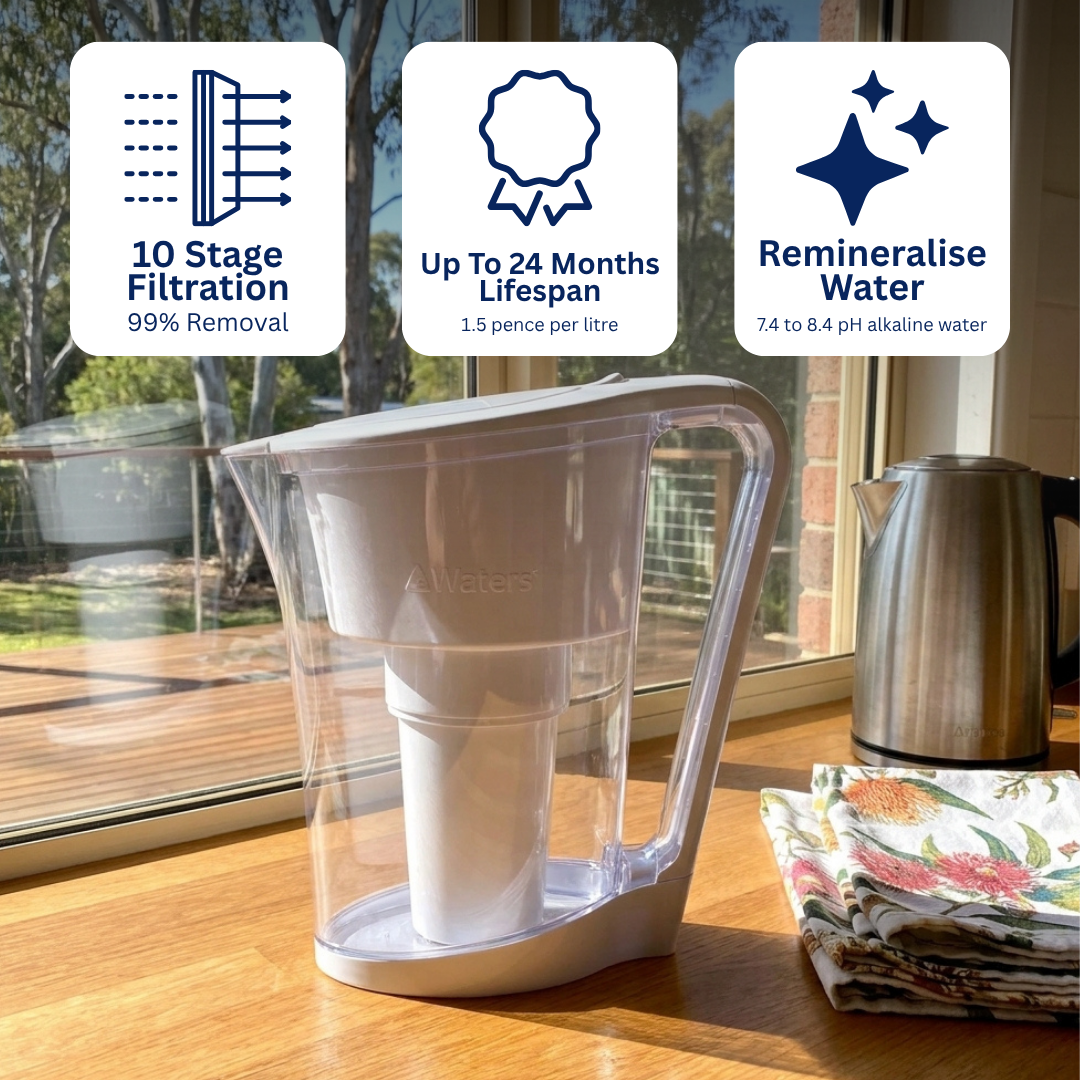
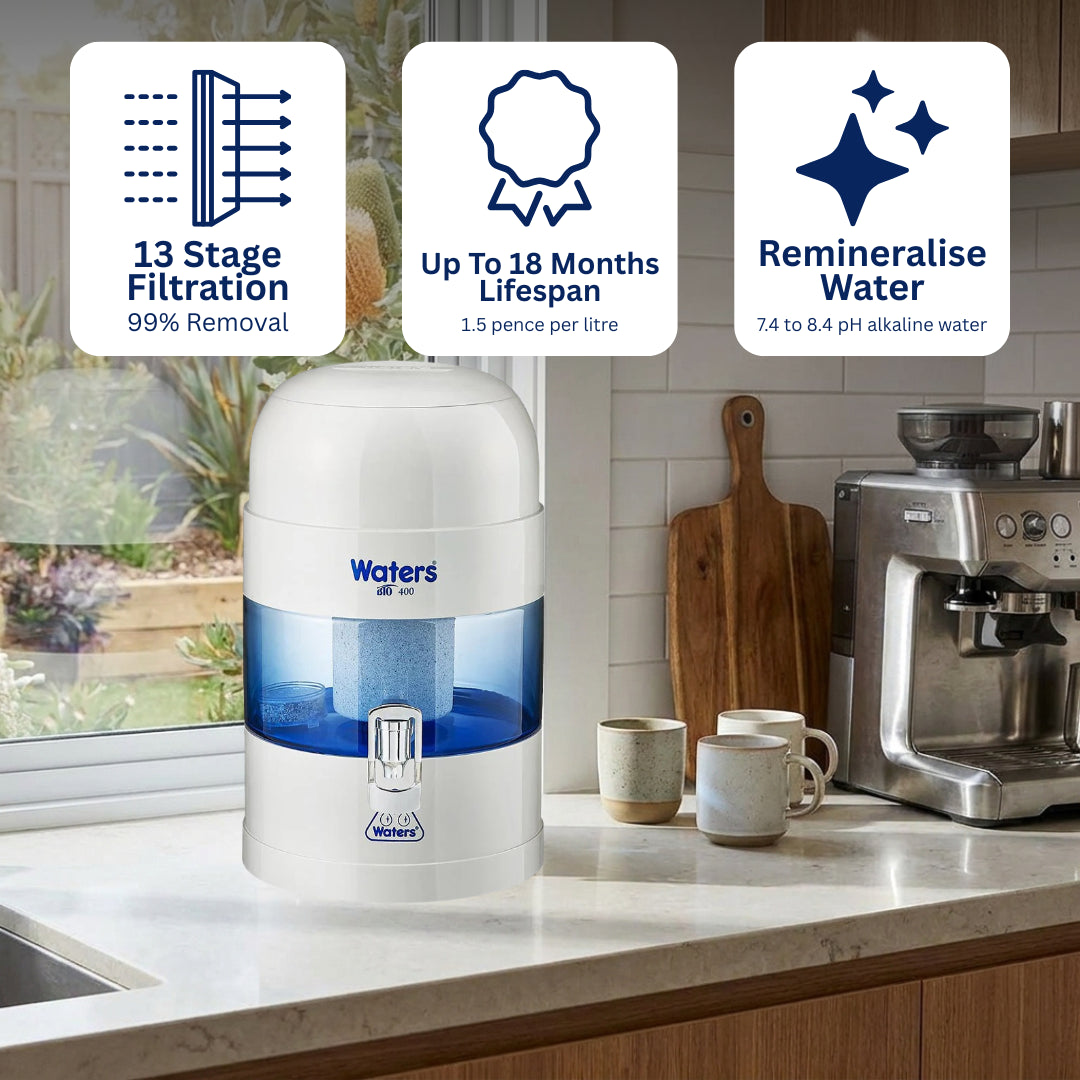
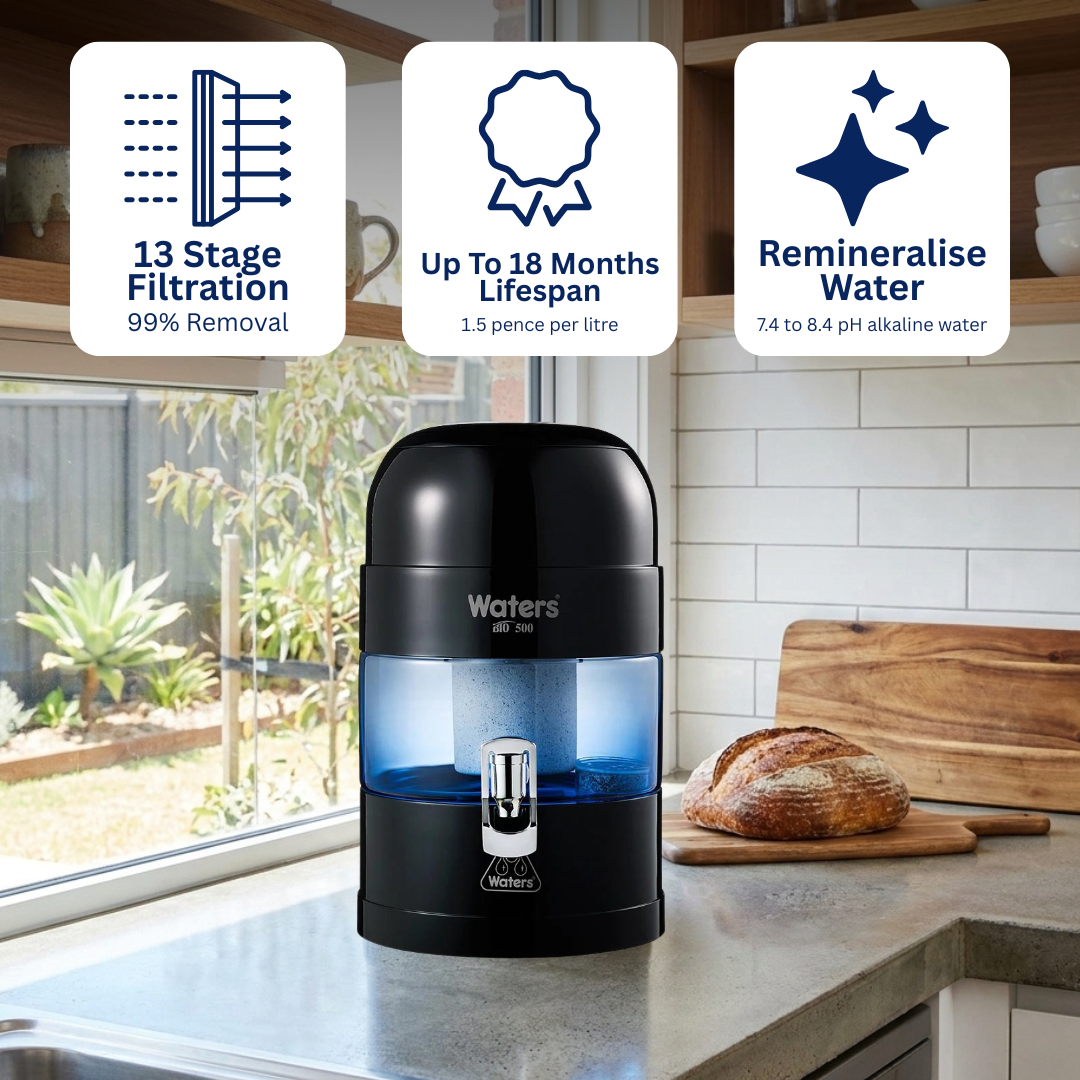
Where a filter does matter is in removing specific contaminants. The AceBio+ jug and the BIO 400 and BIO 500 bench top systems are listed as reducing chlorine, heavy metals and fluoride, with up to 99 per cent removal for some compounds stated in their product listings. Those are product claims you can check against each listing, and they describe what the filter removes, not a proven health outcome. Compare that with a filter that only improves taste, and ask which problem you are trying to solve.
Alkaline Water Side Effects and Who Should Avoid It
For most healthy adults, drinking alkalised water in normal amounts is well tolerated, and the side effects reported in short-term studies are mild, mainly bloating, a feeling of fullness, or loose stools when intake is high. The more useful question is not 'is it safe for everyone' but 'who needs to be careful, and why'. That depends on how the kidneys, the stomach and medication handling interact with what is in the glass.
People with kidney disease. The kidneys are the body's main long-term regulators of acid and mineral balance. When kidney function is reduced, the ability to excrete an excess mineral load, particularly potassium and bicarbonate precursors, is impaired. Mineral-rich alkaline waters can contain meaningful amounts of calcium, magnesium, potassium and bicarbonate, and for someone with chronic kidney disease or on dialysis this is not a trivial addition.
People taking medication. Several common medicines are affected by gastric pH or by mineral binding. Levothyroxine absorption is sensitive to what it is taken with, and calcium and magnesium can chelate with tetracycline and fluoroquinolone antibiotics, reducing their effectiveness.
Infants and young children. Infants have immature kidney function and a much smaller body water pool, so mineral load per kilogram matters more. Formula should be made with water that meets the safety and mineral limits set for infant feeding, and parents should not substitute mineral-rich or alkalised water without checking with their health visitor or GP. Breastfed infants do not need additional water in the first months.
People with reflux or a history of kidney stones. For reflux, the caution is about substituting water for effective treatment rather than about harm from the water itself. For kidney stones, the picture is mixed: high fluid intake is protective, but the mineral profile of the water matters, and some mineral waters can affect urinary calcium and oxalate. Anyone with a stone history should ask their clinician whether the specific product's mineral content is appropriate.
Long-term uncertainty. Short-term studies of a few weeks do not establish long-term safety, and there is no large body of evidence on years of high-pH, mineral-rich water intake in healthy adults. That is not a reason to expect harm, but it is a reason to be honest that the long-term data are thin. The sensible approach is to drink to thirst, avoid forcing large volumes, and treat very high pH products with more caution than mildly alkaline ones.
Watch out: the groups most at risk, people with kidney disease, infants, and those on interacting medicines, are exactly the groups least likely to be represented in the small studies that underpin the marketing claims.
How to Judge Alkaline Water Claims and Choose a Filter
When you read a claim about alkaline water, ask three questions. Is the outcome measured in people, or only in a lab or on a bottle? Is the comparison against plain drinking water of similar quality? And does the evidence come from the manufacturer or from an independent body?
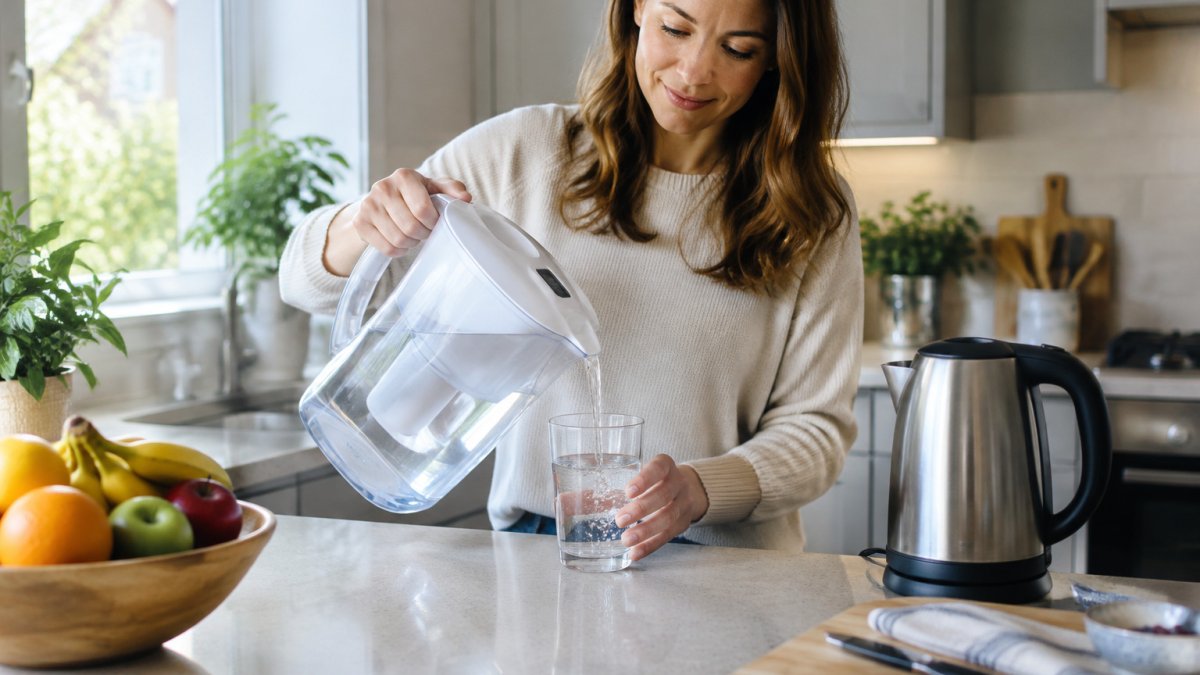
If you decide a filter is worth buying, match the product to the problem. The AceBio+ 1.0 Litre Alkaline Mineral Water Filter Jug (£125.00) is a portable option for a single person or small household. The BIO 400 and BIO 500 5.25 Litre Bench Top Water Filters (£329.00 each) are listed with 5.25 litre reservoirs suited to home and workplace use. Check the filter lifespan on each listing, since cartridge replacement is the real running cost.
Watch out: the pH figure on a bottle or jug tells you very little about health. Look for tested mineral content and independent certification instead.
Filters and alkalised water are a reasonable choice for better tasting water, and some of the evidence for hydration and mineral intake supports that. Claims about detoxifying the body or treating disease do not hold up. Read the research on NHS guidance on drinking water and hydration before making a decision, and see our book a drain inspection equivalent guide for a closer look at how alkaline water is tested in practice.
Best for: households that want better tasting filtered water and are happy to pay for the convenience.
Skip if: you are looking for a medical benefit, or you have kidney disease and have not yet spoken to your clinician.
Frequently Asked Questions
Is alkaline water actually good for you?
The evidence is mixed. Alkaline water is still water, so it hydrates as well as tap water does. Claims that it neutralises acid in the blood or prevents disease are not supported by good human trials, because the body keeps blood pH within a narrow range through the lungs and kidneys. Some people find it pleasant to drink, and the mineral content of some filtered products is a modest plus. Treat broader health claims with caution and check whether a claim is backed by human studies rather than animal or laboratory work.
Does alkaline water help acid reflux?
There is little direct evidence that alkaline water helps acid reflux. Reflux is driven by stomach acid moving back into the oesophagus, and drinking water does not change the acidity of stomach acid in any clinically meaningful way. Some people report short-term relief after drinking water generally, but this is not specific to alkaline water. If reflux is frequent or painful, speak to a GP, who can advise on lifestyle changes and treatments that have proper evidence behind them.
Who should avoid drinking alkaline water?
People with kidney disease, anyone on a medication that affects acid-base balance, and people with a history of kidney stones should speak to a GP or pharmacist before drinking large amounts of alkaline water. Infants should not be given alkaline or mineral-enriched water in place of suitable infant formula or boiled-and-cooled water as advised by health professionals. Most healthy adults can drink it without harm, but it should not replace medical advice.
Can you drink alkaline water every day?
For most healthy adults, drinking filtered alkaline water every day is unlikely to cause harm, provided the water is safe and the overall mineral intake is not unusually high. The practical question is cost and taste rather than safety. If you drink a large volume, check the product's mineral content and do not rely on it as your only source of hydration advice from a health professional.
