

Is Alkaline Water Scientifically Proven? What Research Says
Table of Contents
- What Alkaline Water Is and How It Is Made
- How the Body Regulates Its Own pH
- What the Scientific Evidence Actually Shows
- Potential Benefits: Where the Research Is Promising
- Alkaline Water Side Effects and Risks to Know
- How to Maintain an Alkaline Water Filter for Longevity
- Conclusion
- Frequently Asked Questions
Last Updated: September 28, 2026
What Alkaline Water Is and How It Is Made
Alkaline water is water with a pH above 7, typically between 8 and 9, produced either by adding minerals or by running tap water through an electrolysis chamber that splits it into acidic and alkaline streams. This guide from Waters Co examines whether alkaline water is scientifically proven, separating the physiology from the marketing. The short answer: your body already regulates its own pH within a narrow range, and no drink meaningfully changes that. But the question of whether alkaline water is scientifically proven to help with hydration, mineral intake or recovery is more nuanced than either the sellers or the sceptics suggest. Below, we break down the pH scale, how home filtration systems actually produce alkaline water, what the clinical evidence does and does not show, and how to maintain an alkaline water filter for longevity if you decide to use one.

The pH Scale and Alkalinity Explained
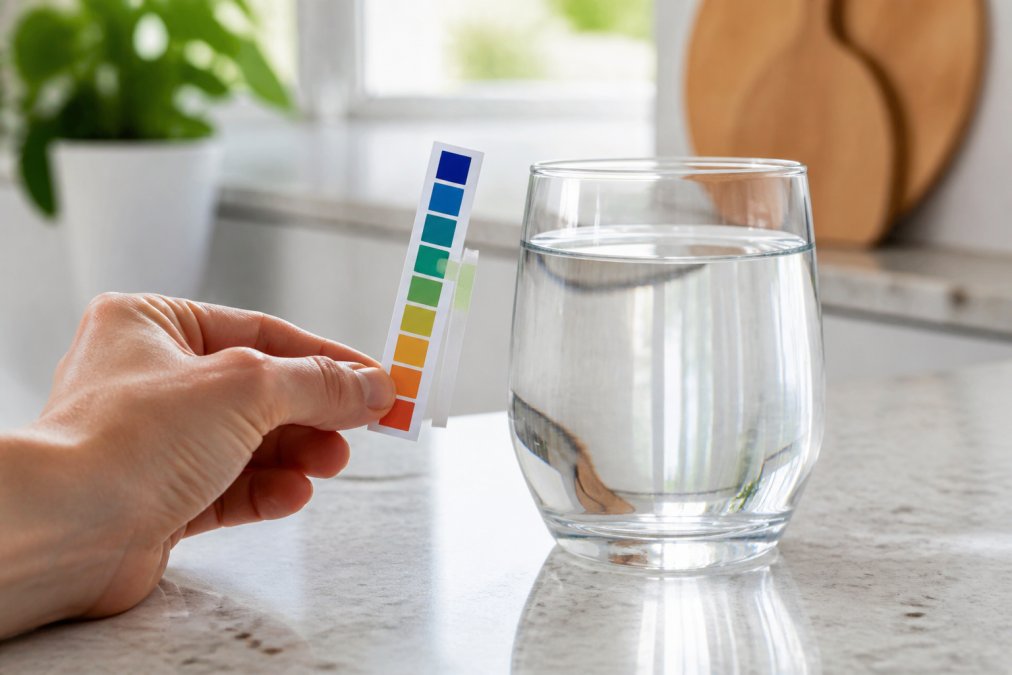
The pH scale runs from 0 to 14, with 7 being neutral. Anything below 7 is acidic; anything above is alkaline. Tap water in the UK typically sits between 6.5 and 8.5 depending on the region and the minerals dissolved in it, and the Drinking Water Inspectorate guidance on water quality sets the parameters suppliers must meet. Alkalinity is not the same as pH, though the two travel together. Alkalinity measures the water's capacity to neutralise acid, which is why bicarbonate content matters more than a single pH reading.
How the Body Regulates Its Own pH
Blood pH is held between roughly 7.35 and 7.45, a window so narrow that a shift of even 0.1 in either direction is clinically significant. This is not a passive property of the body; it is actively defended, second by second, by three interlocking systems. Understanding how those systems work is the single most useful thing you can know when evaluating any claim that a drink "alkalises" you.
Homeostasis: The Buffer System at Work
Homeostasis is the body's process of maintaining stable internal conditions despite external changes. For pH, the first line of defence is chemical buffering. The bicarbonate system is the dominant buffer in blood: carbon dioxide dissolves to form carbonic acid, which sits in equilibrium with bicarbonate ions. Add acid and the equilibrium shifts to consume it; add base and it shifts the other way. Phosphate buffers and plasma proteins, including albumin, provide secondary capacity. Together these buffers absorb an acid or alkali load within seconds, before it can alter systemic pH.
The second line of defence is respiratory.
Why a Glass of Alkaline Water Cannot Shift Blood pH
The stomach is the practical illustration. Gastric acid sits at a pH of 1.5 to 3.5, far more acidic than any alkaline water is alkaline. When you drink water at pH 9, it meets an environment roughly a million times more acidic and is neutralised almost immediately. The bicarbonate in the water is consumed buffering stomach acid, and the chyme that passes into the small intestine is re-acidified and then re-alkalinised by pancreatic bicarbonate as part of normal digestion.
What Can Actually Change Blood pH
The conditions that genuinely shift blood pH are clinical, not dietary: uncontrolled diabetes producing ketoacidosis, chronic kidney disease impairing bicarbonate regeneration, severe vomiting or diarrhoea, respiratory disease, and certain drugs. In each case the cause is a failure of one of the three systems above, and the treatment is medical. No commercially sold water sits in that category, and no regulator recognises it as a treatment for any acid-base disorder.
What the Scientific Evidence Actually Shows
The honest answer is that alkaline water is not scientifically proven to do most of what it is sold to do. There is no credible evidence that it prevents disease, "detoxifies" the body or slows ageing. Where research exists, it is limited, often small, and frequently industry-funded. The NHS overview of water and hydration is clear that ordinary water meets hydration needs, and no regulator recognises alkaline water as a treatment for any condition.
Limitations of Clinical Trials on Alkaline Water
Most trials on alkaline water share a recognisable set of weaknesses, and knowing them lets you read any new study critically.
How to Read the Next Headline You See
When a new study is reported, four questions separate signal from noise. How many participants, and were they healthy adults or a clinical group? How long did the intervention last? Was the outcome measured objectively or self-reported? And who paid for it? A trial that is small, short, self-reported and industry-funded is not evidence you should act on, regardless of how the press release frames it.
AceBio+ 1.0 Litre Alkaline Mineral →
What Would Count as Proof
The claims made for alkaline water would require randomised controlled trials with adequate sample sizes, durations measured in months rather than days, objective endpoints such as blood markers or measured performance, and independent funding. Until that evidence base exists, the correct description is "not proven" rather than "disproven", but the burden sits with the sellers, not with the sceptics.
Potential Benefits: Where the Research Is Promising
Two areas hold up better than the rest: hydration during exercise and mineral intake. Some small studies suggest alkaline water with added minerals may support hydration and reduce acidity in the stomach after intense exercise, though the effect sizes are modest and not consistently replicated. Mineral content, not pH, is the more plausible mechanism. Water that carries magnesium, calcium and bicarbonate contributes to electrolyte balance in a way that purified water does not.
| Claim | Evidence Strength | What Actually Helps |
|---|---|---|
| Alkalises the body | None | Buffer system, lungs and kidneys |
| Improves hydration | Weak to moderate | Total fluid intake, mineral content |
| Aids athletic recovery | Weak | Electrolytes, rehydration timing |
| Supports detoxification | None | Liver and kidneys |
| Better mineral intake | Moderate | Calcium, magnesium, bicarbonate |
Alkaline Water Side Effects and Risks to Know
For most healthy adults, alkaline water side effects are mild or absent. The realistic risks are indirect: paying a premium for a product whose benefits are overstated, or assuming that "alkaline" means "pure" when it does not. Excessive alkalinity can cause gastrointestinal discomfort in some people, and water with very high mineral content may not suit those on sodium-restricted diets.
How to Maintain an Alkaline Water Filter for Longevity
Maintaining an alkaline water filter comes down to three habits: replace cartridges on schedule, keep the reservoir clean, and store the unit out of direct sunlight. Gravity-fed systems lose effectiveness gradually, so the water still tastes fine long after the filter has stopped removing contaminants. Most manufacturers specify a litre capacity or a time interval, whichever comes first, and the time interval usually expires first in a single-person household.

A simple maintenance routine:
- Note the installation date on the unit or in your phone
- Replace cartridges at the stated interval or litre limit, whichever comes first
- Wash the reservoir and lid weekly with warm soapy water, no abrasives
- Rinse new cartridges per the instructions before first use
- Keep the unit out of direct sunlight and away from heat
- Check for mineral scale on the base and descale if it appears
Conclusion
The evidence for alkaline water is thinner than the marketing suggests, and the physiology is clear: your body manages its own pH regardless of what you drink. What genuinely matters is removing contaminants, keeping minerals in the water, and drinking enough of it. Waters Co builds multi-stage filtration systems that do exactly that, removing up to 99.9% of contaminants including fluoride, chlorine and microplastics while remineralising with essential minerals, backed by long-life filters and a lifetime warranty.
Frequently Asked Questions
Is alkaline water actually good or fake?
Alkaline water is real, but the health claims around it are often overstated. Its higher pH comes from dissolved minerals like calcium and magnesium, or from electrolysis. Some small studies suggest benefits for hydration and acid reflux, but larger clinical trials are limited. The scientific consensus is that your body tightly regulates its own pH regardless of what you drink, so alkaline water is not a cure-all. It can still be a pleasant, mineral-rich alternative to tap water.
What happens if you drink alkaline water daily?
Drinking alkaline water daily is generally considered safe for most healthy adults. It may support hydration and provide minerals like calcium and magnesium. However, some people report digestive discomfort or reduced stomach acid when drinking it regularly. If you have kidney conditions or take medication that affects electrolyte balance, speak to your GP before making it a daily habit. Moderation and listening to your body are sensible approaches.
What is the downside of alkaline water?
The main downsides include cost, potential digestive upset from reduced gastric acid, and the risk of overloading on certain minerals if you drink extreme-alkaline water in large amounts. Some people experience nausea or headaches when starting. There is also the risk of relying on alkaline water instead of proven treatments for medical conditions. For most healthy people, occasional use is fine, but it is not a substitute for a balanced diet or medical care.
Does alkaline water provide better hydration than standard tap water?
Research on hydration is mixed. A few small studies suggest alkaline water may hydrate slightly better than plain water after exercise, possibly due to its mineral content and electrolyte balance. However, the evidence is not strong enough to claim it is significantly superior. Standard tap water remains an excellent hydrator. If you enjoy the taste of alkaline water and it helps you drink more, that practical benefit may matter more than any physiological edge.