

Does chlorine removal help with eczema?
Last Updated: October 24, 2026
Quick Summary
Does chlorine removal help with eczema depends on whether chlorine is a trigger for your individual skin. Chlorine strips away natural oils and damages the already-compromised skin barrier in eczema-prone skin, triggering flare-ups, but evidence for chlorine removal improving eczema is indirect rather than from large clinical trials. The only reliable way to know if it helps you is to test a shower filter for 2-4 weeks while tracking your symptoms.
- Chlorine does not cause eczema but worsens existing eczema by stripping protective oils and triggering inflammation in sensitive skin.
- Shower filters using vitamin C or similar reducing agents can neutralise chlorine, but cartridges must be replaced on schedule or performance drops.
- Test chlorine removal by establishing a baseline of your eczema severity for 1-2 weeks, then using a filter for 2-4 weeks and comparing results.
- A 20-30% or greater improvement in your eczema score indicates chlorine is a meaningful trigger for you.
- Water softeners address hardness, not chlorine, and are a different product; check specifications carefully to ensure you are buying the right type of filter.
Table of Contents
- How chlorine affects skin and triggers eczema flare-ups
- Does chlorine in tap water cause eczema?
- Why eczema-prone skin reacts to chlorinated water
- Shower filter for eczema: does it actually work?
- Eczema after shower: what happens and how to prevent it
- Swimming with eczema: chlorine exposure and protection strategies
- Testing whether chlorine removal improves your eczema
- Choosing the right water filtration for sensitive skin
- Frequently Asked Questions
How chlorine affects skin and triggers eczema flare-ups
Chlorine is a chemical used to disinfect water in pools and tap water systems (Chlorine). When your skin contacts chlorinated water, the chlorine strips away the natural oils that protect your skin barrier.
For people with eczema, this becomes a serious problem. Your skin barrier is already compromised. Eczema-prone skin cannot hold moisture as well as healthy skin.
The result is predictable. Itching intensifies. Redness spreads. Flare-ups happen faster and last longer. Many people with eczema notice their skin reacts within minutes of chlorine exposure, whether from a shower or a swim.
This is why understanding does chlorine removal help with eczema matters for eczema management. Reducing chlorine contact is one of the few controllable factors in your environment that directly impacts skin health.
Does chlorine in tap water cause eczema?
Chlorine in tap water does not cause eczema on its own. Eczema is a genetic condition tied to how your immune system and skin barrier function (A parents guide to the management of Atopic Eczema).
However, chlorine absolutely triggers and worsens existing eczema. If you already have eczema, chlorine acts as an irritant that sets off flare-ups. The distinction matters because it changes how you should respond.
Your skin barrier in eczema is defective at holding water. Chlorine damages this barrier further. The result is worse dryness, itching, and inflammation. Some people with mild eczema barely notice chlorine exposure.
This variation is normal. Eczema severity differs between individuals. Your sensitivity to chlorine depends on how damaged your skin barrier is at any given moment.
Why eczema-prone skin reacts to chlorinated water
Eczema-prone skin has a fundamental problem: it cannot retain moisture effectively. The skin barrier contains fats and proteins that seal in water. In eczema, these protective fats are depleted. Water escapes from the skin constantly.
Chlorine makes this worse by being a harsh chemical irritant. It dissolves the remaining protective fats on your skin surface. It also triggers an inflammatory response in sensitive skin.
Additionally, chlorine dries out the outer layer of skin directly. Dry skin becomes cracked and inflamed. Cracks in the skin barrier allow bacteria and irritants to penetrate deeper.
The sensitivity varies by person because eczema severity varies. Someone with mild eczema might tolerate chlorinated water with minimal reaction. Someone with moderate or severe eczema may experience significant flare-ups within hours.
Shower filter for eczema: does it actually work?
A shower filter can reduce chlorine exposure, but whether that improves your eczema depends on whether chlorine is a meaningful trigger for you. Read a personal account of how shower filters improved skin health related to eczema.
It helps to be precise about what a shower filter does. Most shower filters use a reducing agent, commonly vitamin C (ascorbic acid), to neutralise free chlorine as the water passes through the cartridge.
Maintenance matters more than marketing. Cartridges have a rated capacity, often expressed in litres or months of typical use, and performance drops as the media is exhausted.
Waters Co's Therapy Shower Deluxe uses vitamin C and collagen in the cartridge to neutralise chlorine. You can browse the full collection of shower filters to find an option that suits your setup.

Eczema after shower: what happens and how to prevent it
Showering triggers eczema flare-ups because hot water opens your skin pores and strips away natural oils. Chlorine in the water accelerates this damage. After you step out of the shower, your skin is dry, exposed, and vulnerable.
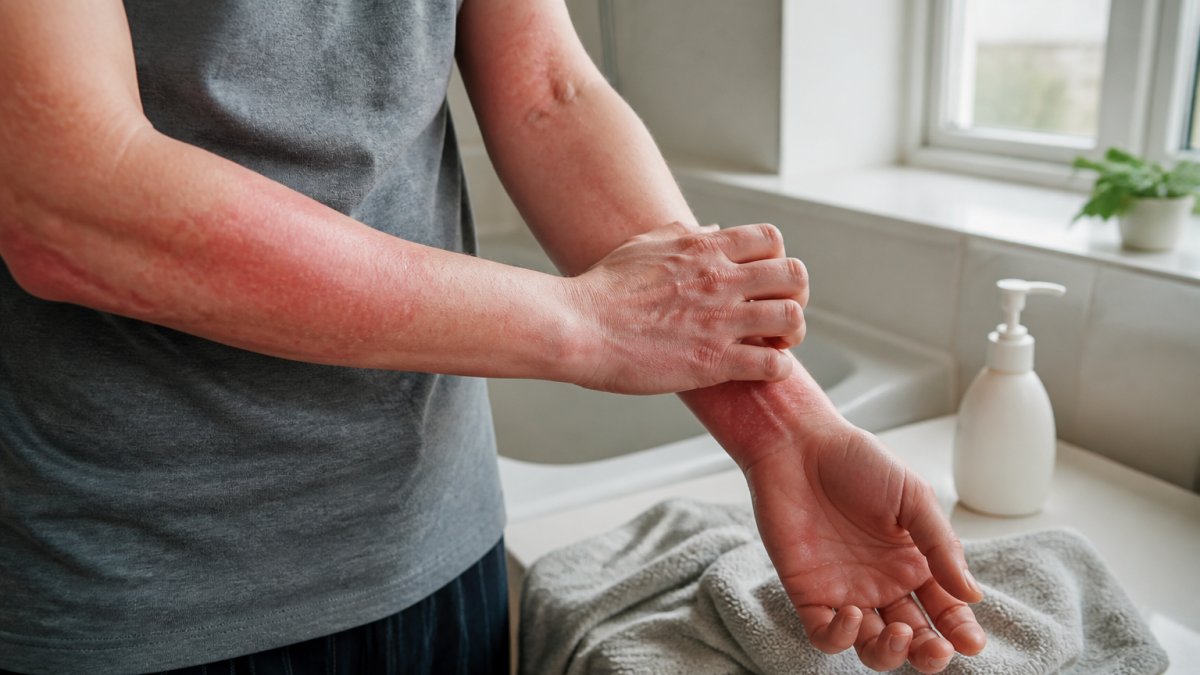
The itching often starts within minutes. Your skin feels tight and uncomfortable. Within hours, redness and inflammation can develop into a full flare-up that lasts days.
Prevent this by changing your post-shower routine:
- Shower in lukewarm water, not hot water. Hot water damages the skin barrier more than warm water.
- Keep showers short. Limit to 5-10 minutes maximum.
- Use a gentle cleanser or no cleanser at all. Plain water is often enough.
- Pat skin dry gently. Do not rub.
- Apply moisturiser within 3 minutes of leaving the shower, while skin is still slightly damp. This traps water in your skin.
- Use an emollient moisturiser designed for eczema, not a light lotion. Petroleum jelly or thick creams work better than thin lotions.
- Avoid perfumed products. Fragrance irritates eczema-prone skin.
If you use a chlorine-removing shower filter, your skin will be less irritated after showering. Combined with a good post-shower moisturising routine, this reduces flare-up risk significantly.
Swimming with eczema: chlorine exposure and protection strategies
Swimming in chlorinated pools poses a bigger challenge than showering because you are immersed in chlorinated water for extended periods. Your entire body contacts the irritant, not just the areas you wash.
Many people with eczema find that swimming triggers severe flare-ups. The chlorine exposure is intense and prolonged. Salt water (ocean swimming) is often gentler on eczema than chlorinated pools, though salt itself can irritate if your skin is already damaged.
If you swim, protect your skin:
- Apply a thick layer of petroleum jelly or barrier cream to sensitive areas before swimming. This creates a protective layer between your skin and chlorinated water.
- Wear a wetsuit or rash guard to minimise skin contact with pool water.
- Rinse your body with fresh water immediately after leaving the pool. Do not wait.
- Shower at home with a chlorine-removing filter if possible. This removes residual chlorine.
- Apply moisturiser while skin is still damp from the shower.
- Consider swimming at pools with alternative filtration systems (ozone, UV, salt chlorination) if available. These use less chlorine than traditional chlorinated pools.
Some people with eczema avoid chlorinated pools entirely and swim in natural bodies of water or salt water instead. This is a valid choice if chlorine exposure consistently triggers severe flare-ups.
Testing whether chlorine removal improves your eczema
The most reliable way to know does chlorine removal help with eczema is to test it yourself and track results. This requires a simple protocol:
-
Establish a baseline. For 1-2 weeks, track your eczema severity daily without any chlorine-removal intervention. Rate your itching, redness, and dryness on a scale of 1-10. Note any flare-ups and what triggered them.
-
Install a chlorine-removing shower filter. Use it for every shower for 2-4 weeks. Continue tracking your skin daily using the same scale.
-
Compare results. If your average eczema score improves by 20-30% or more, chlorine removal is helping you. If scores stay the same or worsen, chlorine is not your primary trigger.
-
Adjust other variables one at a time. If removing chlorine did not help, test other changes: switching to lukewarm showers, changing moisturisers, reducing stress, or adjusting your diet. Change only one variable at a time so you can identify what actually helps.
This approach works because eczema triggers are individual. What helps one person may not help another. Testing your own response is more reliable than assuming chlorine is your trigger based on general advice.
For guidance on testing your tap water quality itself, see how to test tap water quality. Understanding what contaminants are actually in your water helps you prioritise which ones to address first.
Follow this four-step protocol to determine whether removing chlorine from your shower water actually improves your eczema.
| Step | Duration | Action | Measurement |
|---|---|---|---|
| Establish baseline | 1-2 weeks | Track eczema severity daily without intervention | Rate itching, redness, dryness on 1-10 scale |
| Install filter | 2-4 weeks | Use chlorine-removing shower filter for every shower | Continue daily tracking on same 1-10 scale |
| Compare results | After filter period | Evaluate average eczema score change | Improvement of 20-30% or more indicates chlorine is a trigger |
| Adjust variables | Ongoing | Test one change at a time if chlorine removal did not help | Track response to each single variable change |
Choosing the right water filtration for sensitive skin
If your test-and-track period suggests chlorine removal helps, the next step is choosing a system that matches your home and your exposure.
Shower filters target the water you use most for skin contact. Most use a reducing agent such as vitamin C to neutralise free chlorine, and some add media for heavy metals or sediment.
Whole-house or point-of-entry systems treat all the water in the home, including washing and bathing water. They cost more upfront and require installation, and they typically need more maintenance.
Water softeners exchange calcium and magnesium for sodium. They address hardness, not chlorine.
Filter jugs and point-of-use drinking filters are for drinking water. They do not help with shower exposure unless you use filtered water for rinsing, which is impractical for most people.
When comparing options, ask:
- What does it actually remove, and at what flow rate and capacity?
- What is the replacement interval, and what does a cartridge cost over a year?
- Does it soften water, remove chlorine, or both?
- Can you install it in your home, or do you need a renter-friendly option?
A sensible approach is to start with a shower filter, track your symptoms against a baseline, and only consider whole-house treatment if the evidence from your own tracking supports it. For guidance on testing your tap water quality itself, see how to test tap water quality.
Frequently Asked Questions
Can chlorine in tap water make eczema worse?
Yes, chlorine can trigger or worsen eczema in sensitive individuals. Chlorine is an irritant that strips the skin barrier of natural oils, causing dryness, itching, and flare-ups. People with atopic dermatitis are particularly vulnerable because their skin barrier is already compromised. Not everyone with eczema reacts the same way, some notice significant irritation from chlorinated water while others see minimal effects. If you notice itching or redness after showering, chlorine exposure may be a factor.
Does a shower filter remove chlorine?
Yes, shower filters designed specifically for chlorine removal can effectively eliminate residual chlorine from tap water. Filters using vitamin C or activated carbon are most effective. The Waters Co Therapy Shower filter removes chlorine completely using a patented combination of vitamin C and collagen. These filters typically last 6 months with average daily use for two people. Removing chlorine at the shower source can reduce skin irritation and hair loss for eczema-prone individuals.
How soon should I moisturise after bathing if I have eczema?
Apply moisturiser within 3 minutes of bathing or showering. This timing is critical because skin is still damp and more permeable, allowing moisturisers to penetrate deeply and lock in hydration. Waiting longer allows water to evaporate from the skin surface, increasing dryness. Use an emollient like petroleum jelly or a thick cream rather than light lotions. If you've used a chlorine-removing shower filter, you'll still benefit from immediate moisturising to restore the skin barrier and prevent irritation.
Can I swim in a chlorinated pool if I have eczema?
Swimming with eczema is possible but requires protection and careful aftercare. Chlorine in pool water is more concentrated than tap water and can trigger significant flare-ups. To minimise exposure, apply a protective barrier like petroleum jelly or a specialist eczema cream to sensitive areas before swimming, wear a wetsuit if possible, and limit time in the pool. Rinse promptly with fresh water after swimming, pat skin dry gently, and moisturise immediately. Some people find that showering at home with a chlorine-removing filter helps recovery after pool exposure.
