

Does Alkalised Water Help Athletic Recovery?
Last Updated: November 12, 2026
Quick Summary
Does alkalised water help athletic recovery? Current evidence does not show that it does. Its higher pH is unlikely to change blood pH, and the few small studies are limited and often industry-linked. Recovery depends more on replacing fluid and electrolytes, eating well and sleeping.
- Alkalised water usually has a pH between 7.6 and 8.5, compared with about 7 for standard tap water.
- Blood pH is tightly regulated, so drinking alkaline water is unlikely to shift it.
- Most studies on alkaline water and hydration are small, short and often linked to commercial interests.
- Aim to drink roughly 1 to 1.5 litres per kilogram of body weight lost, spread over hours after exercise.
- After long or heavy sessions, include electrolytes, because plain water alone may not replace lost sodium.
Table of Contents
- What Alkalised Water Is and How It Differs From Ordinary Tap Water
- The Acid-Base Balance Claim: Blood pH, Lactic Acid and Exercise-Induced Acidosis
- What the Alkaline Water Hydration Study Evidence Actually Shows
- Does Alkalised Water Reduce Muscle Soreness and Fatigue?
- Water for Post-Workout Recovery: Rehydration, Electrolytes and Timing
- Electrolytes After Exercise: When Water Alone Is Not Enough
- Using Alkalised Water Sensibly After Training: Safety and When to Seek Advice
- Frequently Asked Questions
What Alkalised Water Is and How It Differs From Ordinary Tap Water
Alkalised water is drinking water with a higher pH than standard tap water, usually sitting between 7.6 and 8.5 on the pH scale, and many athletes ask whether does alkalised water help athletic recovery. Tap water in the UK is typically close to neutral, around 7. Alkalised filter systems work by removing contaminants and then adding minerals and alkalising compounds to the water. The difference is chemical, not dramatic in taste, and it is worth knowing exactly what you are buying before you judge the claims.
Most of the marketing around alkalised water focuses on what it does inside the body. The physical product itself is simpler. It is water that has been filtered, mineralised and adjusted, and whether that adjustment changes anything for an athlete is the real question. A Waters Co bench top unit such as the BIO 500 7 Litre Bench Top Water Filter is designed for a household that wants to drink this water every day, not for a single workout.
- Standard tap water: pH close to 7, mineral content varies by area
- Alkalised water: pH typically 7.6 to 8.5, with added minerals
- Filtered alkalised water: contaminants removed first, then minerals added
Watch out: a higher pH on the label does not mean the water will change your blood pH. Your body regulates blood pH tightly, as discussed in the next section.
The Acid-Base Balance Claim: Blood pH, Lactic Acid and Exercise-Induced Acidosis
The main argument for alkalised water in sport is that intense exercise makes the body more acidic, and that drinking alkaline water can counter this. The idea draws on real physiology. Hard training produces lactate and hydrogen ions, and muscles can feel burning and fatigue as acidity rises. Many people reasonably assume that drinking an alkaline liquid must therefore help.
The problem is that blood pH is held in a very narrow range by the kidneys, lungs and buffering systems in the blood. Swallowing water with a higher pH does not reliably shift blood pH, because the stomach's acid and the body's buffers handle the drink before it could change the blood. Lactic acid also does not simply cause the burn people describe, and research on exercise fatigue has moved well beyond the simple acid explanation.
So the mechanism sounds plausible but is not well supported when it comes to drinking alkalised water. That gap between a reasonable-sounding idea and the evidence is where most of the confusion sits.
What the Alkaline Water Hydration Study Evidence Actually Shows
Studies on whether does alkalised water help athletic recovery are fewer and smaller than the marketing suggests. Some small trials have looked at whether alkaline water changes hydration status after exercise, and a number of publications have reported modest effects on fluid balance.
To judge the evidence, it helps to understand what good research looks like. A strong study on this question would be independent, peer-reviewed, and include a clear control group drinking ordinary water. It would have enough participants to detect a meaningful difference, and it would measure outcomes such as rehydration, repeat-exercise performance, or markers of muscle damage rather than just subjective feelings.
A common pattern is that studies showing a benefit are small and often industry-linked, while larger or more independent studies find no clear advantage over ordinary water. This does not mean alkaline water is harmful, but it does mean the evidence is not strong enough to recommend it as a recovery aid.
Good evidence on this question should come from independent, peer-reviewed research with a clear control group, and that kind of research is still limited. You can read the wider scientific picture on alkaline water claims in our guide on Is Alkaline Water Scientifically Proven? What Research Says.
In practice, the honest summary is that alkalised water may be a pleasant way to drink water, but there is not strong proof it outperforms ordinary water for athletes. Anyone expecting a clear performance advantage is ahead of the evidence.
- Most studies are small and short
- Many are linked to commercial interests
- Results differ by pH level and mineral content
- No large, independent trial shows a clear athletic advantage
Watch out: be wary of claims based on a single small study or on testimonials. Look for replication across independent research groups before treating any effect as real.
Does Alkalised Water Reduce Muscle Soreness and Fatigue?
Muscle soreness after hard training is usually linked to microscopic muscle damage and the inflammation that follows, rather than to acidity. Delayed onset muscle soreness tends to peak a day or two after exercise, which does not match the quick acid-burn story. Fatigue is driven by a mix of factors, including energy supply, nervous system signals, temperature and fluid status.
There is limited direct evidence that alkalised water reduces soreness. Some people report feeling better after drinking it, and that feeling is worth noting. But reported comfort is not the same as a measurable reduction in muscle damage or recovery time. If you want less soreness, the stronger levers are sleep, gradual training load, protein intake and adequate total fluid and food.
Many athletes find that drinking enough water matters more than the type of water. If you are dehydrated, any water will help. If you are well hydrated, switching to alkalised water is unlikely to be the deciding factor. Since hydration matters more than alkalinity, recovery also depends on how fluids work alongside salt and creatine, a balance explored by Tennis Freak Gear.
Water for Post-Workout Recovery: Rehydration, Electrolytes and Timing
Recovery after training depends first on replacing the fluid lost through sweat. A useful starting point is to drink roughly 1 to 1.5 litres for every kilogram of body weight lost during exercise, spread over the hours that follow. But that figure is a guide, not a prescription: sweat losses vary enormously between people and between sessions.
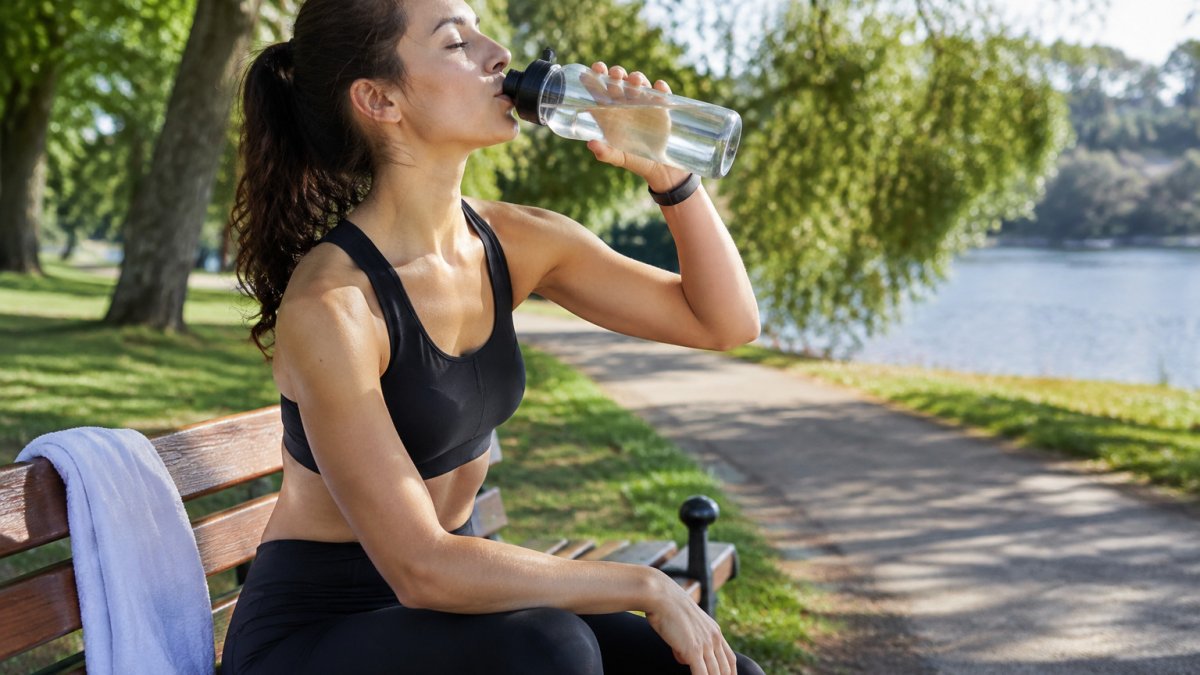
Timing helps. Start rehydrating during exercise, keep sipping in the first hour afterwards, and eat a meal with carbohydrate and protein within a few hours. Drinking steadily, rather than gulping a large amount at once, tends to be easier on the stomach and better absorbed.
For short sessions under about 60 minutes at moderate intensity, ordinary water is usually sufficient. For longer or more intense sessions, especially in heat, you may benefit from a drink containing sodium and some carbohydrate. The amount of sodium in sweat varies widely, but a common range is 200-800 mg per litre of sweat.
- Weigh yourself before and after training to estimate fluid loss
- Sip water steadily during and after exercise
- Eat carbohydrate and protein within a few hours
- Filter water at home so a full bottle is always ready
Watch out: drinking large volumes of plain water quickly after heavy sweating can dilute blood sodium and, in rare cases, lead to hyponatraemia. If you have sweated heavily for hours, include some sodium with your fluids.
Alkalised water can be part of this routine, but it offers no special rehydration advantage over ordinary water. Its main role is as a pleasant, filtered option that helps you drink enough. The practical takeaway is to match your fluid intake to your measured sweat losses and to include electrolytes when the session demands it.
The article sets out the practical steps for rehydrating after training, which a quick-reference table can summarise.
| Step | What to do | Time or frequency |
|---|---|---|
| Measure fluid loss | Weigh yourself before and after training | Each session |
| Replace fluid | Drink roughly 1 to 1.5 litres per kg lost | Spread over hours after exercise |
| Sip during exercise | Start rehydrating while training | During the session |
| Eat after training | Carbohydrate and protein | Within a few hours |
| Add sodium | Use electrolyte drink or salty food for long sessions | Sessions over about 60 minutes or in heat |
| Avoid gulping | Drink steadily rather than in large volumes | Throughout recovery |
Electrolytes After Exercise: When Water Alone Is Not Enough
Sweat contains sodium, and sometimes potassium, magnesium and other minerals. For a short, light session, water is usually enough. For long or very sweaty sessions, plain water can dilute the sodium in your blood, which is a risk if you drink large volumes without replacing salt. This is why sports drinks and salty foods are recommended after prolonged effort.
Mineral-rich water can contribute some calcium and magnesium, but the amounts are generally small compared with what is lost in heavy sweating. Anyone exercising for more than an hour in heat, or sweating heavily, should think about electrolyte replacement, either through food or a suitable drink. Alkalised water is not a substitute for electrolyte replacement after a demanding session.
Many people reasonably ask whether mineral water can cover this need. For most, the answer is partly: it helps a little, but it is rarely enough on its own after a long, hard effort.
Using Alkalised Water Sensibly After Training: Safety and When to Seek Advice
Alkalised water is safe for most healthy adults to drink as part of a normal diet. Problems are uncommon, but very high alkalinity or heavy intake of mineral-rich water may not suit everyone, and people with kidney disease, heart conditions or those on medication affecting fluid or electrolyte balance should speak to their GP before making it a daily habit. Children and anyone with a medical condition should also check with a professional first.
The sensible approach is to treat alkalised water as a pleasant, well-filtered option for everyday drinking, not as a recovery treatment. Drink enough total fluid, replace electrolytes after long or heavy sessions, and pay attention to how you feel. If you have symptoms such as persistent muscle cramps, dizziness, unusual fatigue or swelling, seek medical advice rather than relying on any drink to fix it.
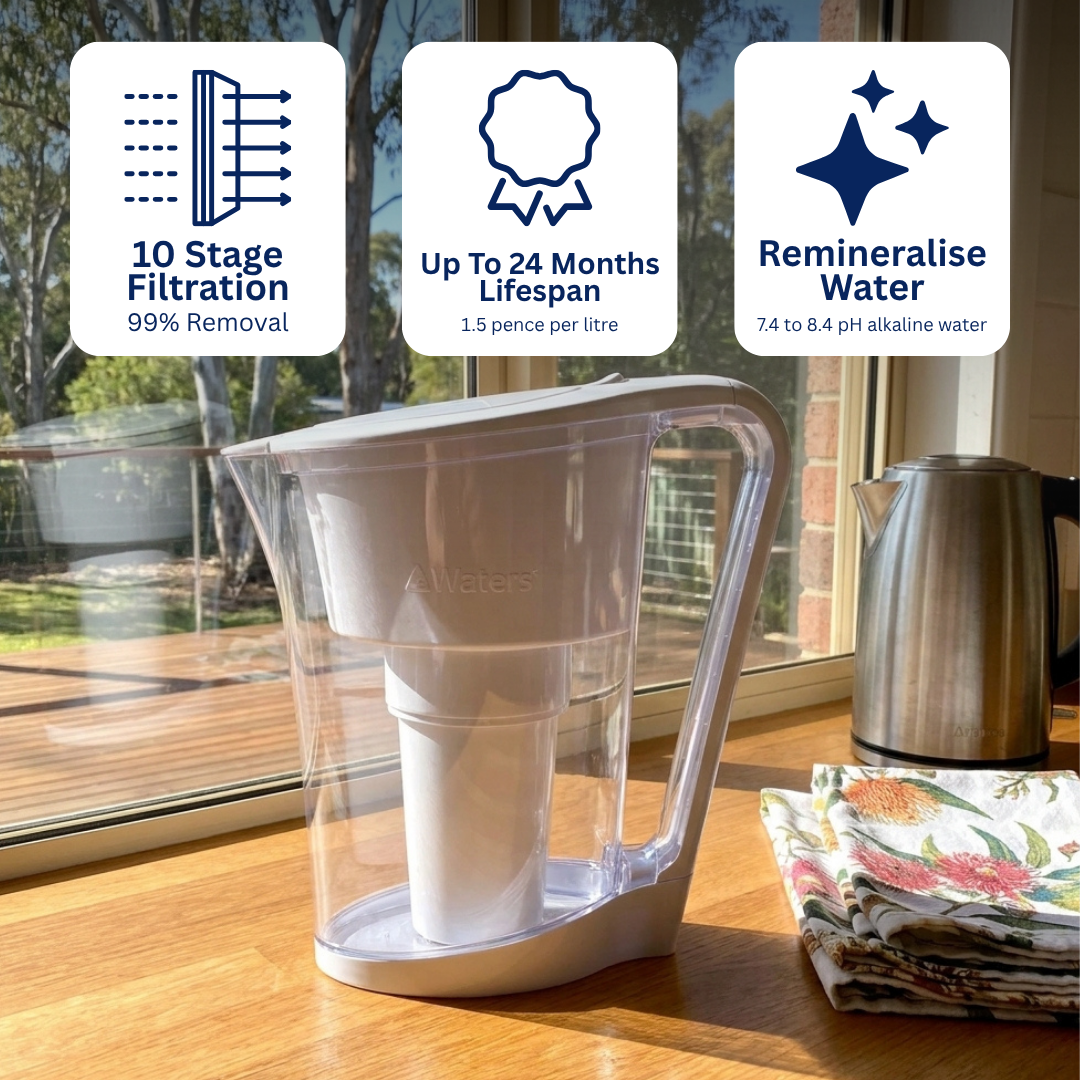
The AceBio+ 1.0 Litre Alkaline Mineral Water Filter Jug removes sediment, chlorine and heavy metals and adds minerals, and suits someone who wants a portable option for home or work. The honest recommendation is to choose it for the taste, the filtering and the convenience of having clean drinking water to hand, and to rely on proven recovery habits for performance.
Is alkalised water a recovery shortcut? Not on current evidence. It is a reasonable everyday drink, and staying properly hydrated, fuelled and rested will do far more for your training than the water's pH.
Looking for a filter that fits your routine? Get clean, mineral-rich water at home with Waters Co, built on over 40 years of filtration research, and see how easy daily hydration can be.
Frequently Asked Questions
Does alkalised water help athletic recovery?
The evidence is limited. Some small studies report modest effects on hydration or perceived soreness, but the proposed mechanism, that alkaline water neutralises exercise-induced acidity in the blood, is not well supported. Blood pH is tightly regulated by the body, and most sports nutrition guidance focuses on replacing fluid and electrolytes lost in sweat. Alkalised water may be a reasonable drink for someone who likes the taste, but it should not replace a deliberate recovery plan.
Is alkalised water better than ordinary water for hydration?
For most people, alkalised water hydrates about as well as ordinary tap water, because hydration depends mainly on the volume of fluid consumed. Alkalised water may taste different or feel smoother, which can encourage some people to drink more. After prolonged or heavy sweating, however, plain water or an electrolyte drink is usually more practical, since sodium and potassium losses are what need replacing.
Is it safe to drink alkalised water every day?
For most healthy adults, drinking alkalised water daily is unlikely to cause harm. People with kidney disease, those on medication that affects electrolyte balance, or anyone with a condition affecting acid-base regulation should speak to a GP or dietitian before making it a regular habit. Check the pH and mineral content on the product information, and keep total daily intake in line with your normal fluid needs.
