

Why Filtered Water Tastes Metallic After a Filter Change
Quick Summary
A metallic taste filtered water usually comes from trapped air, loose carbon fines or manufacturing residue in a new cartridge that has not been flushed properly. Flush the filter with cold water, typically two to ten litres depending on the stage, until the water runs clear and tastes normal.
- Flush a new cartridge before drinking, since residue and carbon fines can leave a metallic or bitter edge.
- A jug or gravity cartridge usually clears within two to four litres of flushing.
- Compare unfiltered and filtered water side by side to find whether the taste comes from the filter or your plumbing.
- Run the cold tap for a minute or two, since corroded pipes can release metal, especially first thing in the morning.
- Stop drinking the water and seek a test if the taste is strong, the water is discoloured, or people in the home have symptoms.
Table of Contents
- Why Filtered Water Tastes Metallic Right After a Filter Change
- How to Flush a New Water Filter Before Drinking
- How Long to Flush a Water Filter for Each Stage
- Diagnosing the Cause: Filter Break-In or a Plumbing Problem
- Water Filter Cartridge Installation Problems to Check
- When a Metallic Taste Means Stop Drinking and Test Your Water
- Booking a Replacement or Checking Your Next Filter Set
- Frequently Asked Questions
Why Filtered Water Tastes Metallic Right After a Filter Change
Last Updated: November 14, 2026
If your metallic taste filtered water appears right after you fitted a new cartridge, you are not alone, and it is usually fixable.
That distinction matters. The fix for a new filter is simple, but a metallic taste filtered water problem from corroded pipes is not. This guide walks you through how to tell the difference, flush your filter correctly, and know when to stop drinking the water and test it.
The taste usually comes from three sources. Trapped air can make water taste flat or odd for a few days. Carbon fines, the tiny black or grey particles left from the carbon media, can give a bitter or chalky note. Residue from manufacturing or packaging can leave a faint metallic edge until enough water has passed through.
Most of these problems clear within a few litres of flushing. If the taste stays after a proper flush, work through the diagnosis below before blaming the filter.
How to Flush a New Water Filter Before Drinking
Flushing a new filter before drinking is the single most effective step, and it is the one most people skip because the instructions feel like an optional extra. They are not.
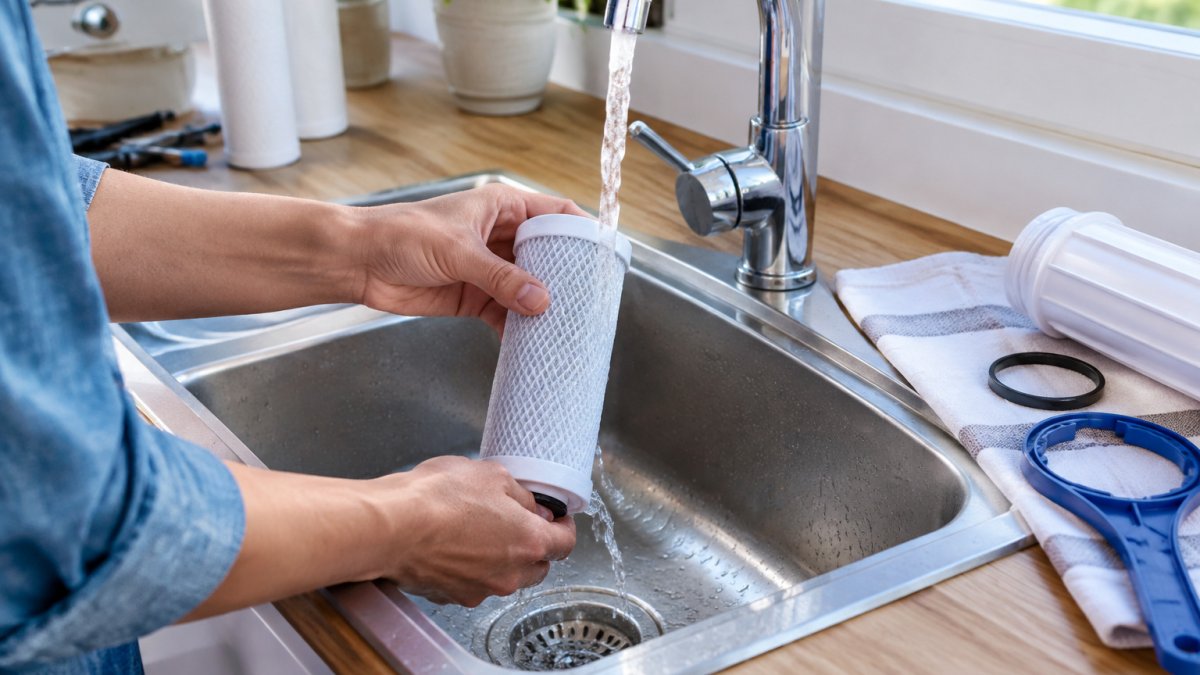
There is no single flush volume that suits every system.
- Remove all packaging, caps, protective film and any shipping plugs from the cartridge and housing.
- Soak the cartridge or pre-filter in clean cold water if the instructions ask for it. Some carbon blocks and membrane elements need a soak to wet out fully; a dry membrane can pass water unevenly and taste odd for longer.
- Fit the cartridge, seat it fully and lock it in place, then check the O-rings and seals are clean and undamaged.
- Run cold water through the filter into a sink, not into a glass you plan to drink from. Keep the flow moderate rather than full blast, because high flow can stir up fines and push air through the housing.
- Flush until the water runs clear and no longer smells or tastes off, then discard that batch and draw a fresh glass to check.
A common mistake is flushing for only a minute or two. Carbon fines often need several litres to wash out completely, and a membrane stage can take longer still.
What to expect after flushing
Taste can change over the first few days even after a proper flush. Trapped air works its way out, the carbon bed settles, and the water may taste flat or faintly odd for a short period before it stabilises.
If your system is a sealed jug or gravity dispenser, follow the flush steps on the packaging. Run the full reservoir through once, discard it, then run a second batch and taste that before relying on the water.
How Long to Flush a Water Filter for Each Stage
Flush time depends on how many stages your system has. A jug with a single cartridge needs less water than a bench-top system with pre-filters, carbon blocks and a membrane. The table below gives a practical guide for common setups. Always check your product guide, as the exact volumes vary.
| Filter stage | What it removes | Typical flush | Watch for |
|---|---|---|---|
| Pre-filter (sediment) | Sediment, rust, large particles | 2 to 4 litres | Cloudy or dark water |
| Carbon block | Chlorine, odour, bitter taste | 4 to 6 litres | Black carbon fines |
| Main or membrane stage | Heavy metals, fluoride, bacteria | 6 to 10 litres | Metallic or chemical taste |
| Post-filter (polish) | Final taste and odour | 1 to 2 litres | Stale or plastic smell |
Typical flush
If your system is a sealed jug or a gravity dispenser, follow the flush steps on the packaging. Run the full reservoir through once, then run a second batch to be sure.
Diagnosing the Cause: Filter Break-In or a Plumbing Problem
Once you have flushed properly, the next job is to work out whether the taste comes from the new filter or from your home's water. This is the step most guides skip, and it is the one that saves you from replacing a perfectly good cartridge or, worse, ignoring a real water-quality problem. Work through it in this order and note what you find at each stage.
- Fill a glass from the cold tap before it passes through the filter and taste it. If it tastes metallic, the problem is in your plumbing or supply, not the filter.
- Fill a second glass from the filter after a full flush and taste that. If the filtered water is clean and the unfiltered water is not, the filter is doing its job and the taste is upstream.
- Compare the two side by side rather than from memory. Taste is easily influenced by expectation, and a direct comparison is far more reliable.
- Check other taps in the home. If the metallic taste appears at every cold tap, the cause is likely the supply or the pipework rather than one appliance.
- If the taste is isolated to the filtered outlet, reseat the cartridge and re-check the seals before assuming the filter is faulty.
This sequence separates a filter break-in issue from a plumbing or source-water problem in about fifteen minutes, and it tells you which of the later checks are worth doing.
Checking for trapped air and carbon fines
Trapped air is one of the most common causes after a filter change. Air pockets in the housing can make water taste flat, sharp or slightly metallic, and they often cause the water to splutter from the tap. To clear trapped air, let the filter sit for a few minutes after filling, then run water slowly. Tap the housing gently to release bubbles. Fine black or grey specks in your glass usually mean carbon fines; keep flushing until they stop.
Ruling out old pipes, tap corrosion and source water
Older homes can have copper or galvanised pipes. Corrosion in these pipes can release small amounts of metal into the water, which tastes metallic. The effect is often worse first thing in the morning, after water has sat in the pipes overnight. Run the cold tap for a minute or two before drinking and see whether the taste fades. Check whether the taste is stronger from the hot tap, which can carry more corrosion, and look for green or blue staining on taps and fittings, which can point to copper.
When taste alone is not enough: testing your water
Taste cannot identify a contaminant. A metallic taste could come from harmless carbon fines, from copper or iron in the pipework, or from something in the supply, and only a test tells you which.
If the taste persists after flushing and the checks above, arrange a water test.
Watch out: if the taste is strong or getting worse, the water is cloudy or discoloured, or several people in the home have new stomach symptoms, stop drinking the water and use an alternative source while you investigate.
Water Filter Cartridge Installation Problems to Check
A poorly fitted cartridge can cause taste problems, leaks and bypass, where water skips the filter altogether. Check these points after any change:
- The cartridge is seated fully and locked in place.
- O-rings and seals are clean, undamaged and lubricated if the manufacturer advises it.
- The housing lid is tightened by hand as far as it goes, without overtightening.
- The cartridge is the correct model for your system.
- The cartridge was not left out of its sealed packet or allowed to dry out.
- Any pre-filter pads or membranes are fitted in the right order.
If the water tastes off and the cartridge seems loose, reseat it, remove it, check the seal and install it again. A dried-out or damaged cartridge should be replaced, not flushed.
When a Metallic Taste Means Stop Drinking and Test Your Water
Most metallic tastes after a filter change are harmless and clear with flushing. Some signs mean you should stop drinking the water until you know what is in it:
- The taste is strong, sharp or getting worse after several days of flushing.
- The water is cloudy, discoloured or has a strong chemical smell.
- Several people in the home, or pets, have new symptoms such as stomach upset.
- You have recently had work done on the water supply or pipes.
- You are using the water to make baby formula or for someone with a weakened immune system.
In these cases, use bottled or boiled water for drinking and cooking, and contact your water supplier. You can also arrange a water test. Water companies and accredited laboratories can advise on testing for metals, bacteria and other contaminants. Ask for a test that covers the substances you are concerned about.
Booking a Replacement or Checking Your Next Filter Set
If the cartridge is damaged, past its lifespan or cannot be flushed clean, a replacement is the right move. The AceBio+ 1 litre Replacement Filter Set contains sub-micron pre-filters, first-stage carbon filters and a main filter, and you can see the full list of what it includes on its product page. The AceBio+ 1.0 litre Replacement Main filter is also available separately, though the main filter is not designed as a single replacement and works best with the upper filters.
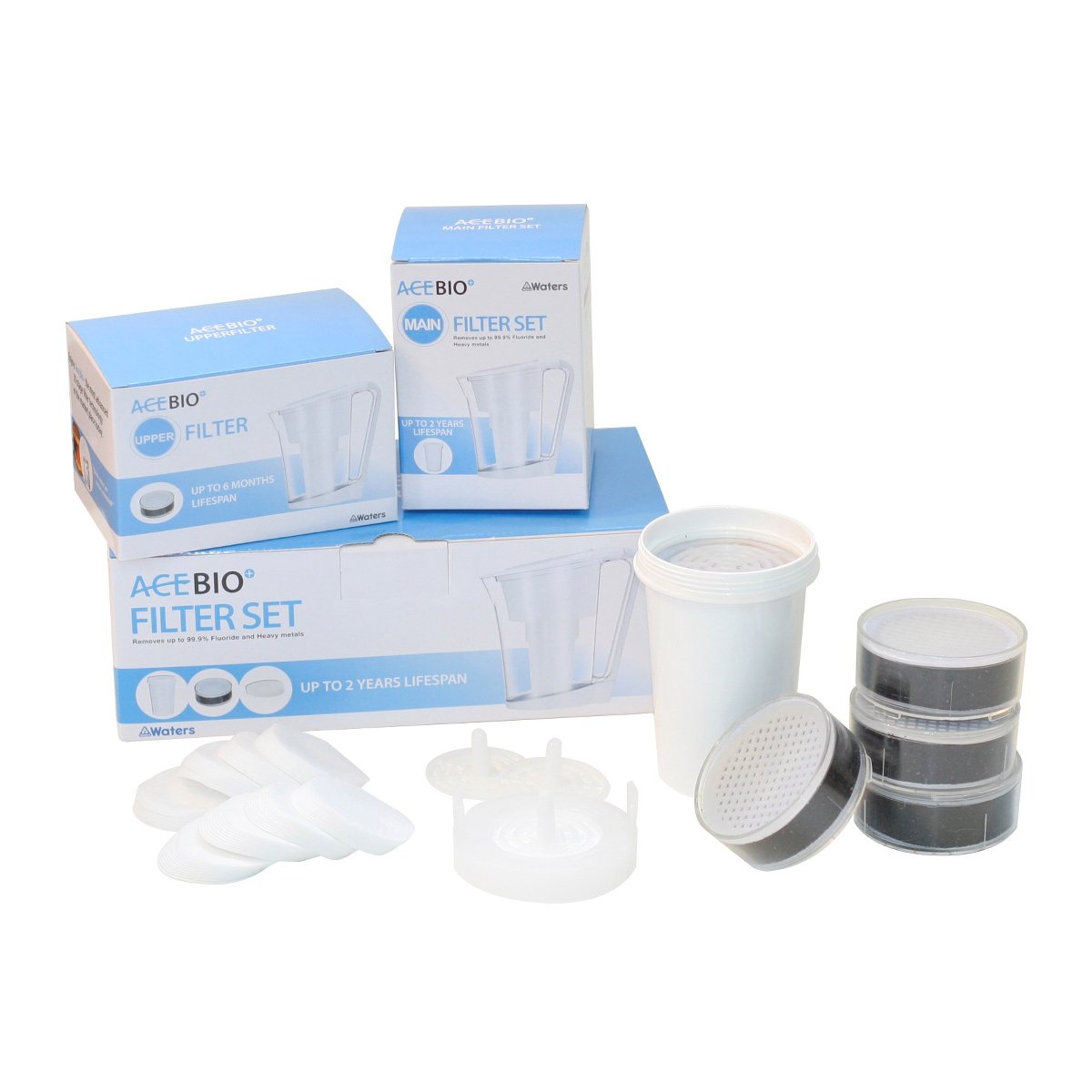
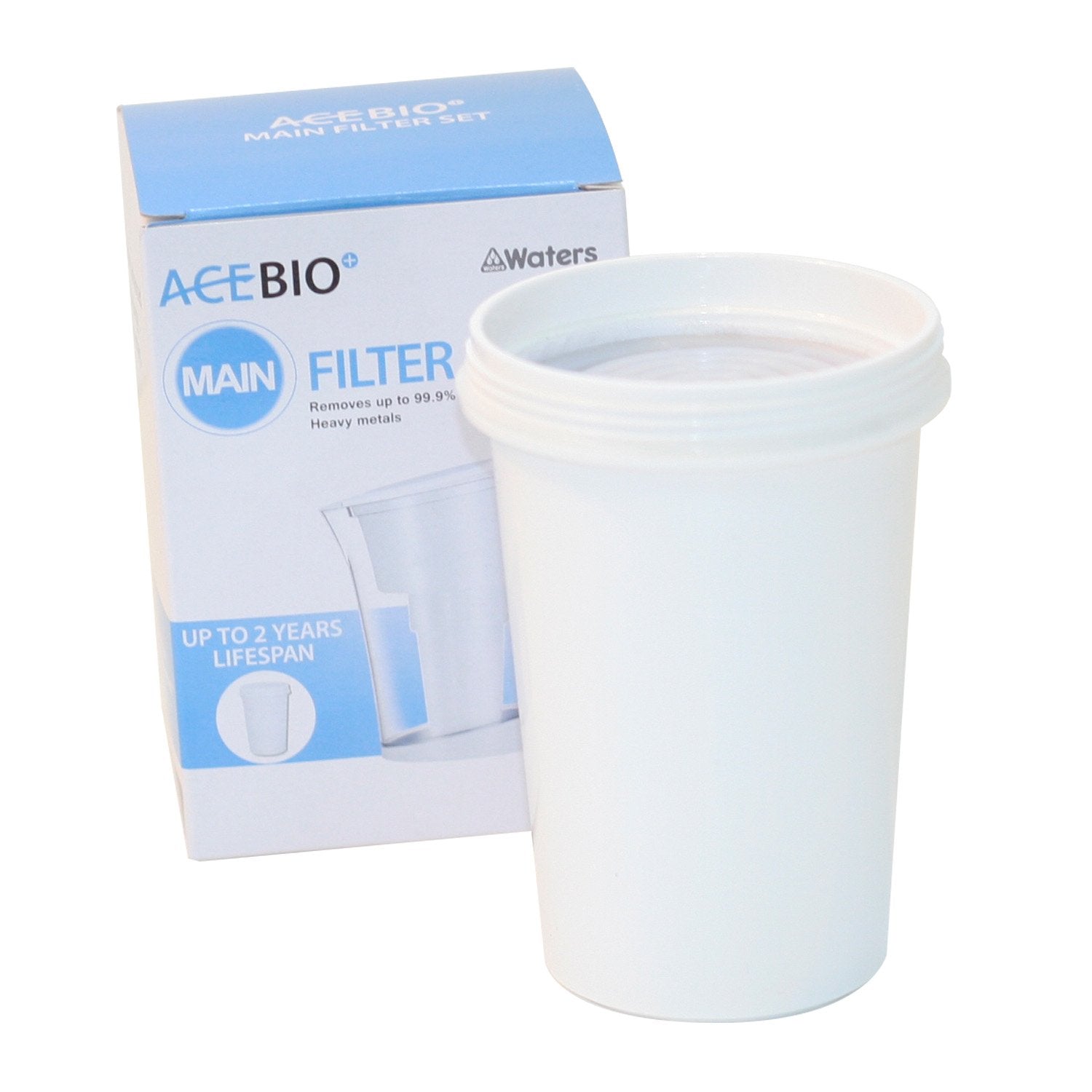
Before you reorder, make sure you know whether the taste problem came from the filter or from your water. A replacement will not fix corroded pipes.
Waters Co's product range includes filter jugs, bench-top systems and replacement parts. Whatever you choose, flush the new filter fully before drinking, and test your water if the taste does not clear.
Frequently Asked Questions
Why does my filtered water taste metallic after changing the filter?
A new filter often leaves a faint metallic or mineral taste for a short time. Fine carbon particles from a new carbon stage, air trapped during installation, and residue from manufacturing can all affect taste. Flushing the filter as its instructions describe usually clears it within a few litres. If the taste stays strong after a full flush, check the installation, look at your plumbing, and consider testing the water. Persistent metallic taste is worth investigating rather than ignoring.
How long should I flush a new water filter?
Most filters need several litres run through them before the water runs clear and tastes normal. The exact volume depends on the cartridge type and its manufacturer's instructions, so follow those first. As a general guide, run the water until it looks clear and the taste settles, discarding the early output. Waters Co's AceBio+ 1 litre Replacement Filter Set includes multi-stage filter cartridges, so flush each new stage as directed rather than only the first.
Could an incorrectly installed filter cause a metallic taste?
Yes. If a filter is not seated fully, or if seals and connections are not properly aligned, unfiltered water can bypass the media, and air can become trapped in the housing. Both can change taste. Re-check that every stage is correctly fitted, that no seal is damaged, and that the unit is assembled in the order the instructions specify. If the taste improves after reinstalling and flushing, installation was the likely cause.
Is it safe to drink water that tastes metallic after a filter change?
A faint taste during the first few litres after a new filter is usually harmless, but a strong or persistent metallic taste is a reason to stop drinking the water until you know the cause. Stop if the taste does not fade after a full flush, if the water looks discoloured or cloudy, or if the taste changes suddenly. Do not rely on taste alone to judge safety. A water test from an accredited laboratory can confirm whether metals or other contaminants are present.
