

CrystalQuest Alternative for Home Use: 5 Best Picks
Table of Contents
- What a CrystalQuest Alternative for Home Use Actually Needs to Do
- Quick Comparison: Best Home Water Filtration System Options
- Countertop Water Filter Comparison: Gravity-Fed Bench Top Models
- Do You Need a Reverse Osmosis Water Filter for Home Use?
- Jugs and Portable Options for Renters and Smaller Spaces
- Home Water Filter Replacement Cartridges: Costs and Lifespan
- Total Cost of Ownership: Filtered Water vs Bottled Water
- How to Choose: A Practical Home-Use Decision Framework
- Frequently Asked Questions
Last Updated: October 20, 2026
What a CrystalQuest Alternative for Home Use Actually Needs to Do
If you've been searching for a CrystalQuest alternative for home use, first clear up what "CrystalQuest" refers to. In most UK households the name gets attached to two very different things: a gravity-fed countertop water filter and, confusingly, an old arcade game.
A good crystalquest alternative for home use does three jobs at once. It removes the contaminants people actually worry about, including chlorine, heavy metals, fluoride and microplastics. It works without plumbing, electricity or a permanent installation.
That last point matters: a filter that costs more upfront but lasts 18 months per cartridge set usually beats a cheap jug that needs a new cartridge every quarter.
Quick Comparison: Best Home Water Filtration System Options
Here's the short version. Every option below is gravity-fed, needs no plumber, and suits renters as well as homeowners.
| Model | Capacity | Upfront Price | Filter Life | Best For |
|---|---|---|---|---|
| BIO 400 | 5.25 litres | £329.00 | Up to 12,000 litres / 18 months | Most households |
| BIO 500 | 5.25 litres | £329.00 | Up to 12,000 litres / 18 months | Same unit, black finish |
| BIO 500 MAX | 7 litres | £349.00 | Up to 12,000 litres / 18 months | Families of 4+ |
| AceBio+ Jug | 1.0 litre | £125.00 | Up to 4,800 litres / 24 months | Couples, small flats |
| ♥MyWaterJug | 1.5 litres | £64.99 | Up to 300 litres / 3 months | Budget and travel |
Bigger upfront spend buys longer filter life, which lowers your cost per litre over time.

Countertop Water Filter Comparison: Gravity-Fed Bench Top Models
Gravity-fed bench top filters are the closest like-for-like replacement for a CrystalQuest-style system. They sit on the worktop, fill from the tap, and pass water through multiple filtration stages without any pump or power supply.
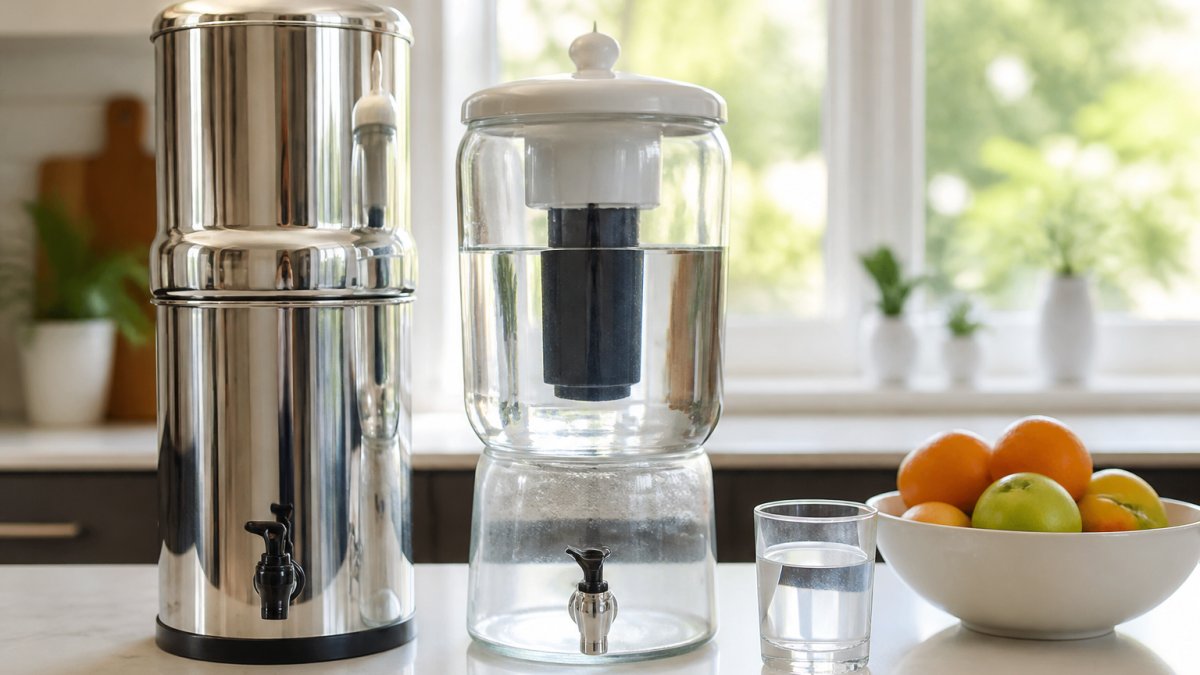
BIO 400 and BIO 500: 5.25 Litre Bench Top Filters
The BIO 400 and BIO 500 are the same unit in different finishes, light grey and black respectively, both priced at £329.00. Each runs 13 stages of filtration and activation, with a hand-blown blue silica glass reservoir and a 5.25 litre capacity.
The included filter set lasts up to 12,000 litres or 18 months, at around 3 pence per litre.
Both carry a lifetime warranty and need no electricity or tap connection. For a two to four person household, this is the size we'd point most people towards.
BIO 500 MAX: 7 Litre Capacity for Larger Households
Same filtration, bigger tank: the BIO 500 MAX holds 7 litres and costs £349.00, a £20 step up for an extra 1.75 litres.
That extra capacity matters if you're filling bottles for a family or cooking with filtered water, refilling a 5.25 litre unit three times a day gets old fast. The MAX also lists a pH range of 7.6 to 8.5 and the same 12,000 litre, 18-month filter life.
Do You Need a Reverse Osmosis Water Filter for Home Use?
Probably not, and this is where a lot of buyers overspend.
That makes RO a poor fit for renters and anyone wanting a simple bench top setup, and it wastes water.
Gravity-fed multi-stage filtration takes a different approach: it removes contaminants and then reintroduces minerals. For most homes on mains water, that's the more practical balance.
The exception is a household with a specific, tested water quality problem that only RO addresses. If that's you, get your water tested first rather than guessing.
Jugs and Portable Options for Renters and Smaller Spaces
If space is tight or you're renting short-term, a jug makes more sense than a bench top unit. Two options cover most of that ground.
The AceBio+ 1.0 Litre Alkaline Mineral Water Filter Jug costs £125.00 and runs 10 stages of filtration.
The ♥MyWaterJug 1.5L is the budget entry at £64.99.
The trade-off: the MyWaterJug costs less but needs cartridges four times a year; the AceBio+ costs nearly double upfront but runs up to two years between filter sets.
Home Water Filter Replacement Cartridges: Costs and Lifespan
Cartridge cost decides whether a system is genuinely cheaper than bottled water, and it's the number most buyers never check.
Here's how the replacement cycles compare across the range:
- BIO 400 / BIO 500 / BIO 500 MAX: filter set lasts up to 12,000 litres or 18 months
- AceBio+ Jug: filter set lasts up to 4,800 litres or 24 months
- ♥MyWaterJug: cartridge lasts up to 300 litres or 3 months
The bench top units win on cost per litre by a wide margin; Waters Co's figure of around 3 pence per litre is the benchmark to compare against.
BIO 400 5.25 Litre Bench Top Water Filter →

Filter life depends on your water quality and daily usage, so treat the litre figures as a guide. Hard water areas and heavy daily use will shorten lifespan.
Total Cost of Ownership: Filtered Water vs Bottled Water
Most buyers compare the sticker price of a filter against the price of a bottle and stop there, which flatters bottled water because it ignores how quickly the bottle spend repeats. The honest comparison is cost per litre over the full life of a filter set, plus the small ongoing costs.
The arithmetic, done properly
Take the BIO 400 at £329.00: its filter set is rated for up to 12,000 litres or 18 months, at around 3 pence per litre, the figure to test against your own habits.
- Bench top range (BIO 400, BIO 500, BIO 500 MAX): roughly 3p per litre across the filter set's life. A household using 4 litres a day for 18 months drinks about 2,190 litres, which at 3p works out at roughly £66 in filter cost spread across that period, on top of the £329.00-£349.00 upfront.
- AceBio+ Jug at £125.00: a filter set rated for up to 4,800 litres or 24 months. Even at a conservative 5p per litre, 4 litres a day for two years (about 2,920 litres) is roughly £146 in filter cost, but the jug's 1 litre capacity means far more refilling labour.
- ♥MyWaterJug at £64.99: a cartridge rated for up to 300 litres or about 3 months. At four cartridges a year, a 4-litre-a-day household burns through a cartridge roughly every 75 days, so budget for four to five replacements a year on top of the purchase price.
What bottled water actually costs
A household buying two litres of bottled water a day spends far more over 18 months than the £329.00 a BIO 400 costs, before counting the plastic, storage space and shop trips. The exact figure depends on what you buy, but bottled water is the expensive option by a wide margin once you multiply by 78 weeks.

The costs that don't show on the receipt
A fair total cost of ownership also includes:
- Replacement cartridges and filter sets, the dominant running cost, covered above.
- Cleaning and descaling, bench top reservoirs benefit from periodic cleaning, especially in hard water areas; budget for a food-grade cleaning agent a few times a year.
- Replacement parts, taps, seals and spares. A lifetime warranty on the bench top range covers manufacturing faults, but consumable parts still wear.
- Electricity, nil for gravity-fed units. This is the quiet advantage over reverse osmosis, which needs a pump and a plumbed supply.
- Water waste, nil for gravity-fed units, unlike RO systems that send reject water down the drain.
The cheapest filter to buy is rarely the cheapest to run. Work out cost per litre over the full filter life, add cartridge replacements and cleaning, then compare that total to your actual bottled water spend over the same period.
A quick self-check
Take your weekly bottled water spend, multiply by 78, and compare it to the price of a bench top unit plus one replacement filter set over the same 18 months. For most families the filtered option pays for itself well inside the first year, and every filtered litre is a bottle you did not buy, transport or bin.
How to Choose: A Practical Home-Use Decision Framework
Most buying guides stop at capacity and budget, but a filter lives in a real kitchen shared by real people.
1. How many people are drinking from it? One or two: AceBio+ jug or MyWaterJug.
2. Do you have 25cm of clear worktop? Yes: BIO 400, BIO 500 or BIO 500 MAX. No: jug.
3. How much water do you use daily? Under 3 litres: 5.25 litre bench top.
4. What is your budget ceiling? Under £100: MyWaterJug. £100-£200: AceBio+. £300+: bench top range with lifetime warranty.
The home-use questions most guides skip
Where will it live? A bench top unit is a permanent worktop fixture; a jug can go in the fridge.
How will you keep it clean and safe? Gravity-fed units need periodic cleaning of the reservoir and tap.
Is it for shared or individual use? A shared kitchen filter needs enough capacity that nobody is left waiting.
What happens when something goes wrong? Check the warranty and availability of replacement cartridges and spares before you buy.
- Count daily drinkers in the household
- Measure available worktop space, including fill clearance
- Estimate daily filtered water use in litres
- Set a realistic upfront budget
- Check filter replacement cost, not just purchase price
- Confirm warranty terms and spare-part availability
- Plan a cleaning routine for the reservoir and tap
That framework covers the decision for most homes.
Frequently Asked Questions
What is the best CrystalQuest alternative for home use?
The best CrystalQuest alternative for home use depends on your space and household size. A gravity-fed bench top filter like the BIO 400 (5.25 litres, £329) suits most kitchens because it needs no plumbing or electricity. For larger households, the BIO 500 MAX holds 7 litres. Renters who cannot install anything permanent often prefer a jug such as the AceBio+ (1 litre, £125). All three remove up to 99% of chlorine, fluoride, heavy metals and bacteria.
Which home water filter removes the most contaminants?
Multi-stage gravity filters tend to remove the widest range in one unit. The BIO 400 and BIO 500 use 13 stages of filtration and activation, reducing up to 99% of sediment, rust, bacteria, cysts, chlorine, chemicals, heavy metals and fluoride. Reverse osmosis also removes a broad spectrum but typically strips minerals and needs plumbing plus wastewater. If you want fluoride reduction specifically, check that the filter uses a dedicated fluoride medium rather than standard carbon alone.
Are under-sink water filters better than countertop filters?
Neither is universally better. Under-sink systems hide away and deliver water straight from a tap, but they need plumbing work and are awkward in rented homes. Countertop gravity filters such as the BIO 400 need no installation, no electricity and no tap connection, and you can move them between kitchens. For a rented property or a kitchen where drilling is not an option, a countertop model is usually the more practical choice.
How often should home water filter replacement cartridges be changed?
It varies by system. The BIO 400 and BIO 500 filter sets last up to 12,000 litres or up to 18 months. The AceBio+ filter set lasts up to 4,800 litres or up to 24 months. The MyWaterJug cartridge lasts up to 300 litres or around 90 days. Actual lifespan depends on your daily usage and water quality, so a filter reminder service helps you avoid running a spent cartridge past its useful life.
Do water filters remove limescale?
Most standard carbon and gravity filters reduce chlorine, metals and sediment but do not remove the calcium and magnesium that cause limescale. If hard water is your main concern, look for a system that explicitly addresses scale, or treat it as a separate problem from drinking water quality. A filter that softens water will change the mouthfeel, but check the specification rather than assuming every filter does it.